It has changed our lives but has remained (almost) the same since the year of its invention, 1876. But how does a 4-cylinder engine work as well as any other internal combustion engine, and what is it made of?
An internal combustion engine is a mechanism that converts the chemical energy of fuels into mechanical energy. If you’ve ever wondered how an engine works, this process explains the basics.
To understand how it works, let’s take the four-stroke gasoline engine, also called the four-cylinder engine, as an example: it’s the most common type of engine, and its operation has remained unchanged since its invention in 1876.
In this article, we’ll explain how the operating cycle of an internal combustion engine works, and how cylinders within cylinders produce mechanical energy.
The Phases of the Internal Combustion Engine in a 4 Cylinder Engine
The operating cycle of an internal combustion engine is divided into four phases:
- Intake
- Compression
- Combustion
- Expulsion
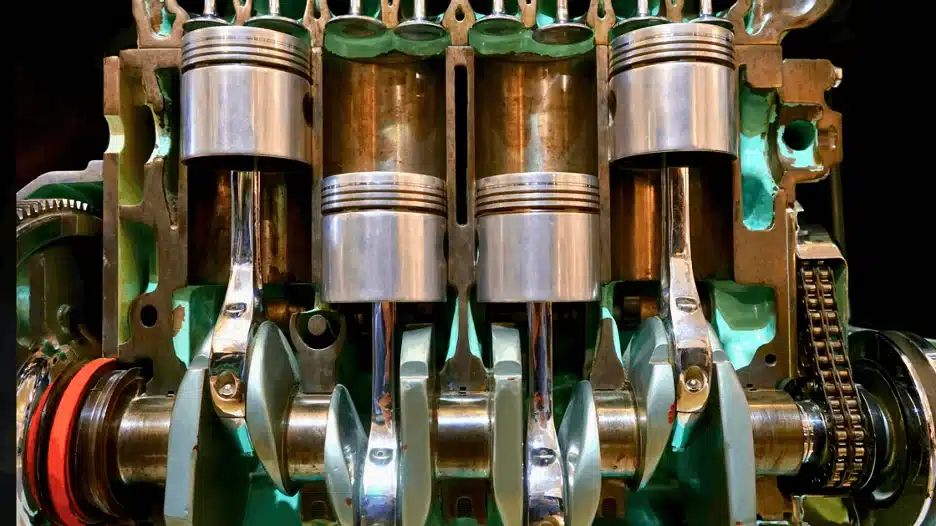
Specific car engine components manage each phase. The basic layout of an internal combustion engine consists of the engine block, a single piece made of cast iron or aluminum that contains the cylinders, in which the engine pistons slide.
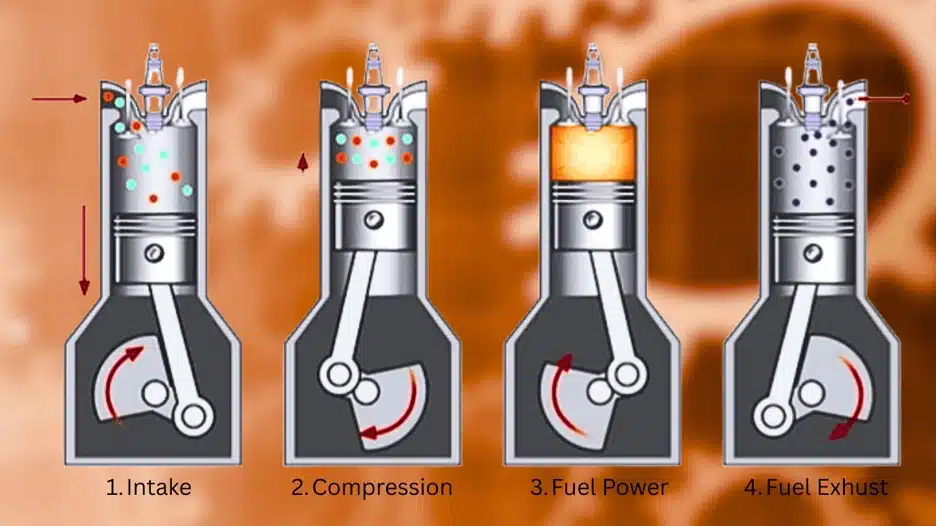
1: Aspiration (Intake Stroke)
When we turn the key in the car’s ignition, an electric motor initiates the first phase of the operating cycle, namely the intake stroke.
During this phase, the piston moves from the highest point of the cylinder, called top dead center, to the lowest point, called bottom dead center, creating a space inside the cylinder.
At this moment, the intake valve opens a cap that opens and closes to seal or loosen the cylinder. When it opens, the air-fuel mixture is drawn into the cylinder, introduced either through a carburetor, which creates the air-fuel mixture and is directly connected to the intake valve duct, or through a fuel injector, which atomizes the fuel directly into the combustion chamber.
2: Compression (Compression Stroke)
The second phase is the compression stroke. In this phase, the piston moves from bottom dead center to top dead center, compressing the fuel and air inside the cylinder to increase the fuel’s explosive power.
During this phase, the intake valve closes, sealing the cylinder and preparing the 4-cylinder engine for ignition.
3: Combustion (Combustion Stroke)
The third phase of the cycle is the combustion stroke. In this phase, the spark plug creates a spark that ignites the fuel inside the cylinder.
The explosive force of combustion pushes the piston downward, generating mechanical energy within the internal combustion engine.
4: Expulsion (Exhaust Stroke)
The final phase of the cycle is the exhaust stroke. The piston moves from bottom dead center to top dead center, expelling the exhaust gases through the exhaust valve, which was closed until this point.
Immediately afterward, the intake valve reopens, and the cycle begins again in the four-stroke engine.
This mechanism is identical in all engines, even the most obsolete ones. What has changed over the years is the engine components: the goal is to make fuel combustion more efficient, thereby allowing the engine to consume less and less gasoline.
This also allows for greater use of the chemical energy available from the fuel. The main difference between newer and older cars is that they have higher power and lower fuel consumption.
How Many Cylinders Are There in Internal Combustion Engines?
There are various types of engine displacement:
● Single-cylinder: meaning with one cylinder. Today’s scooters are almost all single-cylinder.
● Twin-cylinder: two cylinders, like Harley-Davidson or Ducati.
● Three or four cylinders, like the cars we use every day.
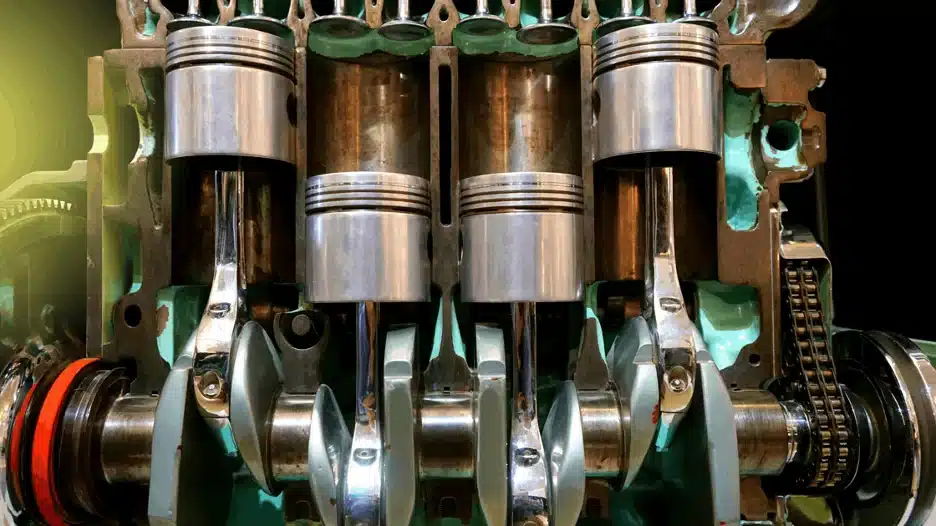
But the engine sizes don’t stop there; there are also six-cylinder engines, like those in Formula 1 cars (which also have a hybrid electric motor). Then there are also eight-, ten-, or twelve-cylinder engines, like the Lamborghini Aventador.
Fun fact: We often hear people say “2-liter engine, or a 1600cc gasoline engine”, and so on. This refers to engine displacement, which is the sum of the volumes of all the engine’s cylinders. For example, a 2-liter engine will have four cylinders, each with a volume of 0.5 liters.
The Engine Components
In addition to the engine block and cylinders, there are other fundamental engine components. Inside the cylinders are the pistons, moving parts that slide back and forth.
The cylinders are connected to the crankshaft, which transforms the piston’s movement into mechanical energy.
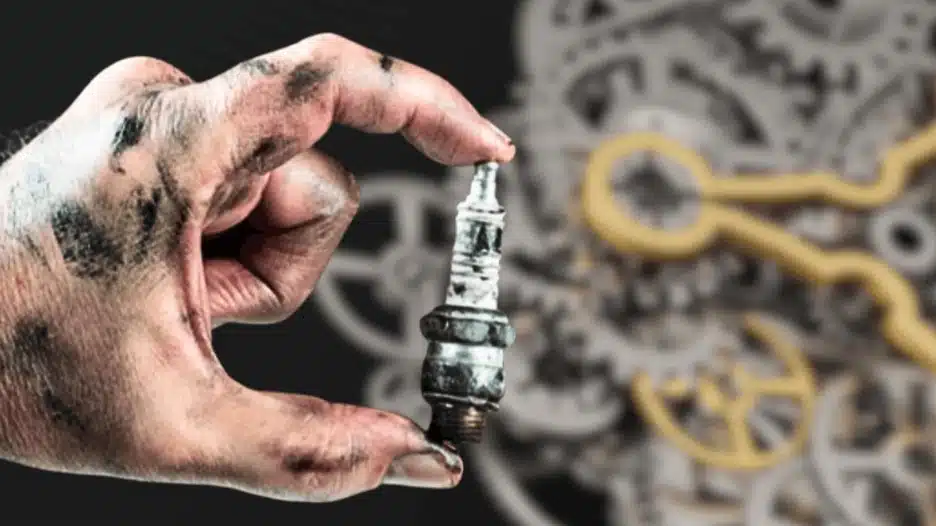
On top is the cylinder head, which houses the valves that control the intake and exhaust of gases. Then there are the spark plugs, located in the cylinder head, which create the spark that ignites the fuel.
To ensure that everything runs in perfect sync, engines are equipped with timing belt or chains, which connect the movement of the pistons to the camshaft, which controls the opening and closing of the valves.
Difference Between Two-Stroke vs. Four-Stroke Engines
As we’ve said, the four-stroke engine is one of the most common, but there’s another type: the two-stroke engine, which is simpler to operate.
The main difference is the way energy is generated. Instead of four strokes, only two occur per cycle: intake/compression and expansion/exhaust.
The Environmental Impact of the Internal Combustion Engine
Internal combustion engines have been a major technological innovation that has enabled unprecedented economic growth and increased mobility.
However, their environmental footprint requires attention and the development of cleaner technologies.
Hybrid engines have improved combustion efficiency while reducing emissions, helping balance performance and sustainability.
Engine Efficiency
Internal combustion engines are highly inefficient. Since these engines rely on an explosion to turn energy into mechanical power, modern gasoline engines are only 20-40% efficient.
Most of the energy from the explosion in the combustion chamber is turned into wasted heat. Gasoline engines will always be highly inefficient due to the nature of turning chemical energy into mechanical output. Other factors like friction (metal components sliding over each other) also play a huge role in decreasing the efficiency of modern day engines. The less moving parts an engine has the more efficient it will be because it has less friction.
To put this into perspective, for every dollar you spend on gasoline, only $0.20 to $0.40 is converted to mechanical power and the rest is expelled as heat.
Extra for Car Lovers
The most practical way to understand how a combustion engine works is to learn with an engine replica in a small version, handy and lightweight.
To achieve this, here is a key accessory that will not only explain the mechanism of an engine but also complement your passion as a car lover: A 3D printed 4-cylinder engine keychain
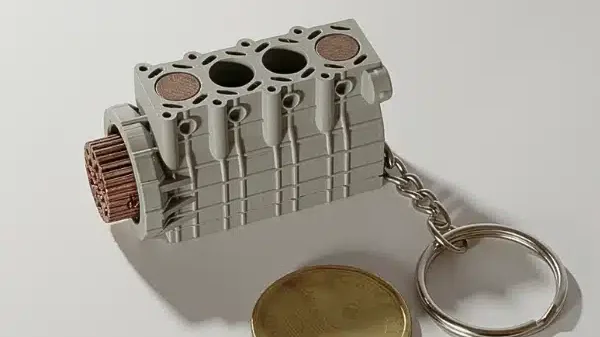
The mini engine keychain does virtually what the actual engine does, with 4 pistons moving in real time when you spin the crankshaft.
Turn the crankshaft and watch the pistons move up and down, following the full four-stroke cycle in your palm.
The keychain is built from PLA plastic, lightweight, durable, and designed for daily use.
It comes in multiple color options to match your style or your car.
It is priced at $24.99 CAD, with free shipping to the US, Canada, and Australia.