If you have ever stood over an open drawer digging for a #2 Phillips while the glue dried, the paint set, or the customer waited, you already know the problem. Screwdrivers multiply. You start with a basic set, then you pick up a stubby for tight spaces, a long flathead for prying (which you shouldn’t admit to), a few precision screwdrivers for electronics, and somehow you end up with a tangled pile that all looks identical until you actually need a specific one.
The good news is that getting them in order is one of the easier wins in the whole shop. Screwdrivers are small, they share a common shape, and that means a little structure goes a long way. This guide walks through how to organize screwdrivers in a way that actually sticks, plus a handful of screwdriver storage ideas for different setups and budgets.
Screwdriver Storage Ideas: Start by Sorting What You Actually Own
Before you buy a single organizer, dump everything out. All of it. Check the junk drawer, the glovebox, the bottom of the toolbox, and that one coffee can on the workbench.
Now sort. The goal here is to see what you are working with, because most people own far more screwdrivers than they think, and a fair number of duplicates they never use.
Group them by type and size. A simple way to break it down:
- Phillips (usually #0 through #3, with #2 being the everyday workhorse)
- Flathead / slotted, sorted from narrow precision tips to wide blades
- Torx and star screwdrivers, which show up constantly in automotive and electronics work
- Hex / Allen screwdrivers, if you keep them separate from your wrench sets
- Specialty bits: square drive, tri-wing, security tips, and anything else odd
- Precision screwdrivers for small electronics
Once they are grouped, be honest about the duplicates. Three nearly identical #2 Phillips screwdrivers do not need three slots. Keep the best one, set a backup aside, and let the rest go. This step alone usually cuts the pile by a third, which makes every storage decision after it simpler.
Pick a Screwdriver Organizer and Toolbox That Matches Your Space
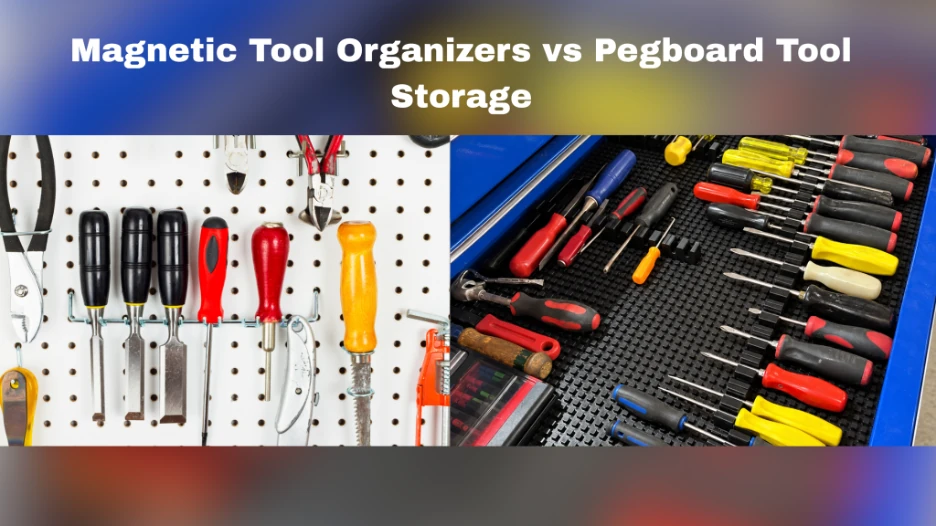
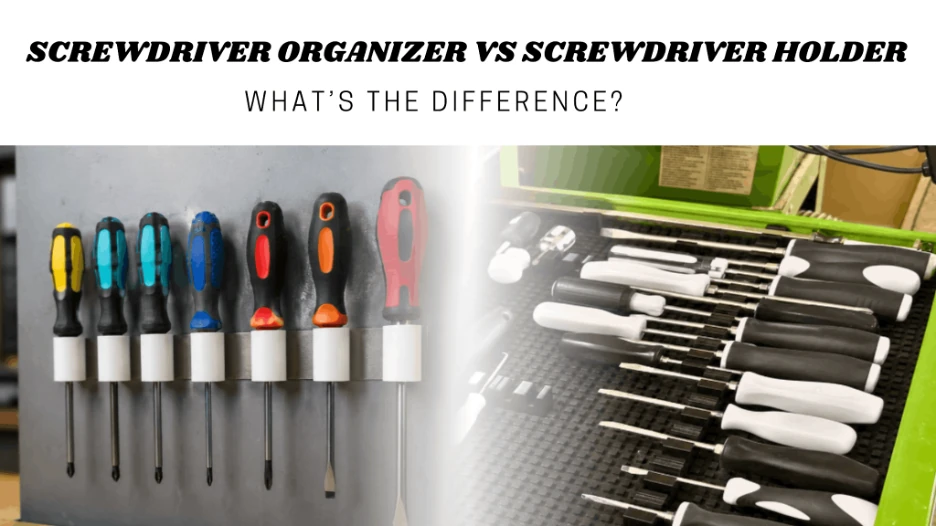
There is no single best screwdriver holder, only the one that fits how you work and where you work. A mobile mechanic has different needs than someone with a fixed bench in the garage, workshop, or utility room. Here are the options worth considering.
Drawer Trays and Modular Design Custom Systems
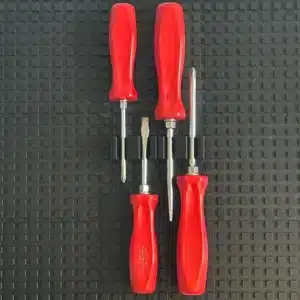
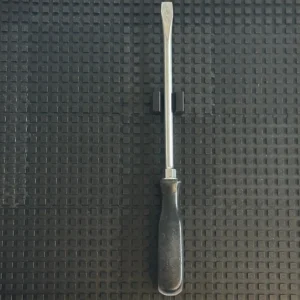
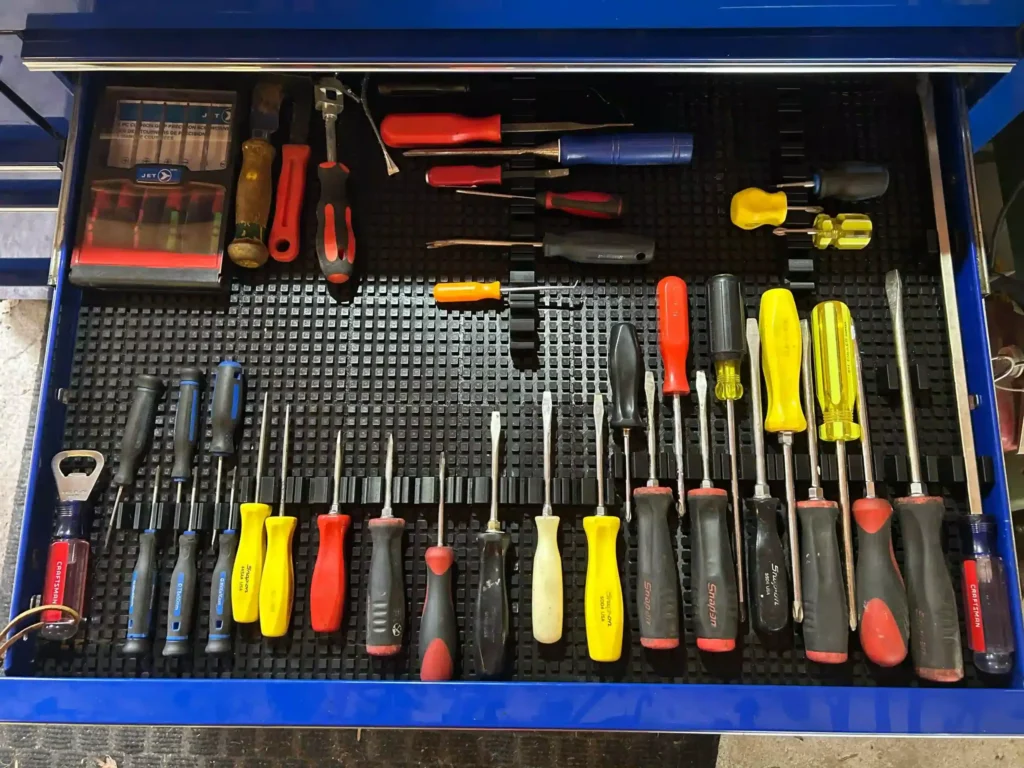
If your screwdrivers live in a tool chest or toolbox, a drawer tray is hard to beat. Each screwdriver gets its own channel, the handles stay put when you slide the drawer, and you can see the whole set at a glance. The Automotive Accessories NA modular system designed to fit your SnapOn Classic Toolbox takes this a step further.
You have a grid where you can place attachments for each tool, and the attachments connect and clip together for a custom fit, so the moment one is missing, the empty attachment tells you exactly which one walked off. The Automotive Accessories NA modular system has Modular Tool Mats that you clip together in your SnapOn Toolbox to create the grid, and there are various attachments so you can customize your setup exactly how you like.
For screwdrivers, there are Large Magnetic Screwdriver Attachments, Medium Magnetic Screwdriver Attachments, and Small Magnetic Screwdriver Attachments that clip into the mats. Because the attachments are magnetic and securely clipped into the mats, your tools and organizers won’t slide around in your toolbox, making the setup efficient and keeping everything secure. Made from durable PETG and comes with strong Neodymium Magnets (Magnetic Screwdriver Attachments and Modular Mats sold separately).
This approach pairs naturally with the rest of a well sorted chest. If you are tackling the whole thing, our guide on how to organize your toolbox covers the bigger picture, and it follows the same logic you are using here.
Bench Top Stands and Carousels
A weighted stand or a spinning carousel keeps a working set within arm’s reach on the bench. A simple screwdriver rack or bench stand can also be made from wood, using stable boards for a tidy DIY setup. A DIY version can be made from a 25″, 2×4 plank, which is an ideal size for a compact organizer. Drill each hole 2 inches apart for better spacing. These shine for repetitive work where you reach for the same six screwdrivers over and over. They are less ideal if you own a large collection, since most stands top out around twenty slots, but as a grab and go station they are excellent.
Magnetic Strips
A magnetic strip mounted to the wall, in a wall mount or part of a pegboard setup holds screwdrivers firmly and looks good while doing it. Some wall organizer sets include multiple pieces to store different tools. Works best for screwdrivers with exposed metal near the handle. Lightweight precision screwdrivers can be hit or miss depending on the magnet strength, so test before you commit your whole set to it and use screws to attach the organizer safely.
Arrange Them in an Order That Makes Sense
Owning a screwdriver organizer is only half the job. How you arrange the screwdrivers inside it determines whether you actually save time and cut down on search.
Group by type first, then by size within each type. Keep all your Phillips together running small to large, then your flatheads, then Torx, and so on. Your brain learns the layout fast when there is a logic to it, and within a week you will be reaching for the right one without looking.
Put your most used screwdrivers in the easiest spot to reach. For most people that means the #2 Phillips, a medium flathead, and whatever Torx sizes your daily work demands, plus stubby screwdrivers if you use them often. The precision set and the oddball specialty screwdrivers can live a little further out of the way since you reach for them less often. You can use the same logic to match screwdriver placement with nearby pliers or other tools you often grab together.
Label Everything (Your Future Self Will Thank You)
Sorting gets you organized. Labeling keeps you organized.
When every slot or channel has a clear label, putting a screwdriver back becomes automatic instead of a decision. There is no hesitation about where it goes, which is exactly what prevents the slow slide back into chaos. It also makes it obvious to anyone borrowing a tool where it belongs, and obvious to you when something is missing.
You do not need anything fancy. A label maker works, painter’s tape and a marker works in a pinch, and durable drawer labels work best of all for a setup you want to last. If you want this part to look sharp and hold up to shop conditions, our tips in how to label toolbox drawers will point you in the right direction.
Keep It That Way
Here is the part nobody likes hearing: organizing your screwdrivers once does almost nothing. Keeping them organized is the whole game, and it comes down to one small habit.
Put the screwdriver back when you are done with it, which keeps more room in the drawer and avoids wasted space. Don’t put it back at the end of the day, not at the end of the job, but right when you are done with it. It takes two seconds and it is the single difference between a system that lasts for years and a drawer that is a disaster again by next month.
Every few months, do a quick reset. Pull everything, wipe down the screwdrivers, check for any that have gone missing or doubled up, and make sure each one is back in its home. Five minutes of maintenance beats another full reorganization down the road.
The Bottom Line
A good screwdriver storage system is not about owning the most expensive holder on the shelf, and the best setup is not always the lowest price or highest end option. It is about three things working together: keeping ready what you actually use, giving every screwdriver a dedicated home, and labeling your toolbox so putting things back is effortless. Our Modular Tool Organizer System and Magnetic Drawer Labels do all of these for your toolbox, all you have to do is make sure you put your tools back in the same spot.
Get these right and you stop losing minutes to the hunt or having to buy some complicated system to save time. You reach, you grab the right screwdriver the first time, and you get back to the work that actually matters. Whether you go with a drawer tray, our modular grid system, a bench stand, or a mix of all three, the principle holds. A place for everything, and everything findable fast.