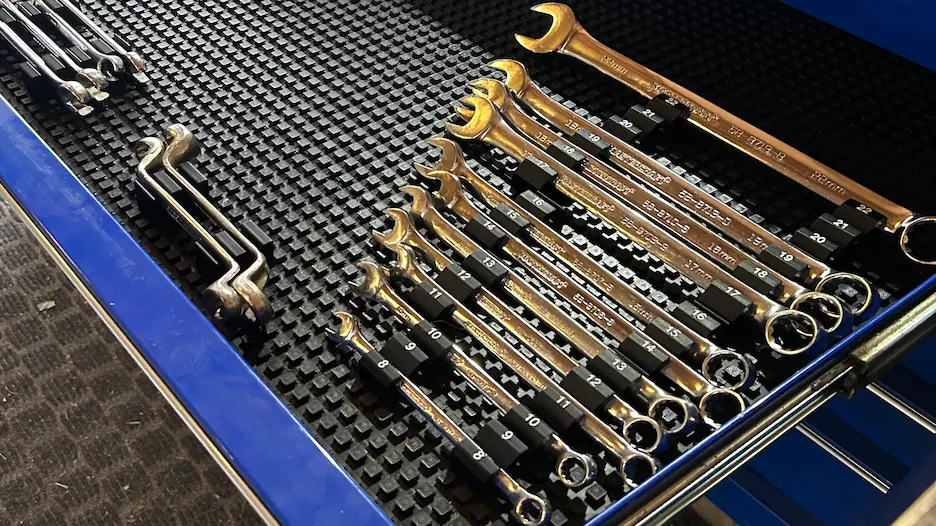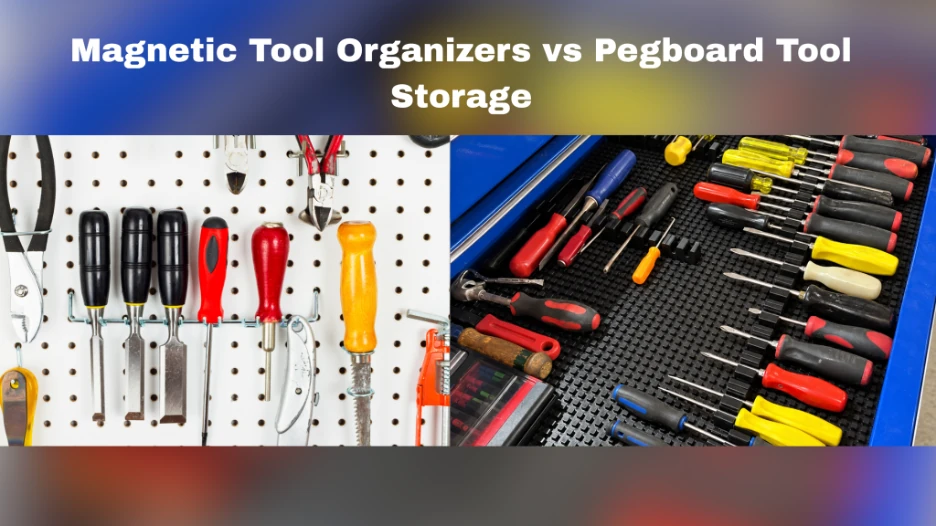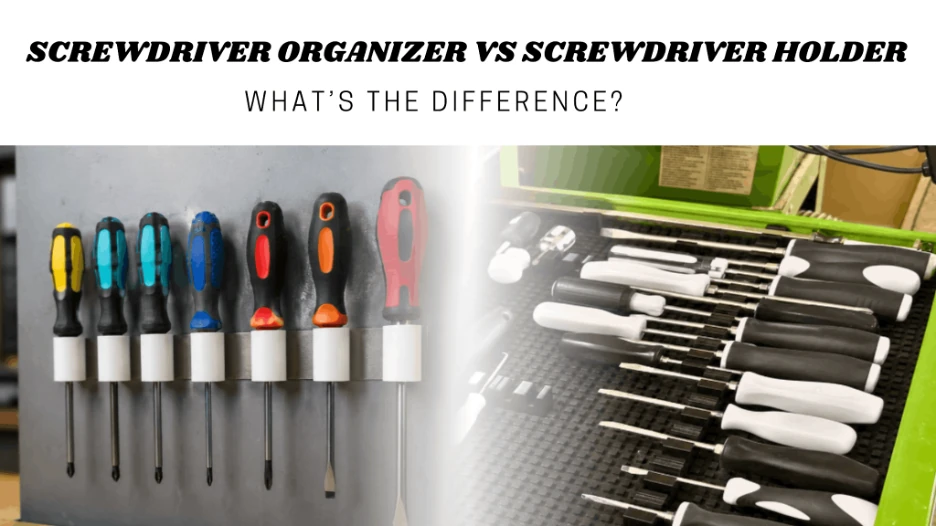

A good screwdriver organizer should help you grab the right tool quickly, keep your drawer from turning into a mess when it opens and closes, and store your screwdrivers in a way that protects them. The best choice depends on your drawer space, how many screwdrivers you have, how often you use them, and how much you want to spend.
In this guide, you will learn how trays, foam, magnetic organizers, and DIY options compare in real toolbox drawers, and how to choose the right one for your setup. If you also want a practical method for sorting and arranging your screwdrivers before picking an organizer, see our guide on how to organize screwdrivers.
For most toolbox drawers, a tray is the simplest, fastest setup. Choose foam if you want a fixed, professional layout and do not mind extra time to build it. Choose a magnetic or modular organizer if you want the setup to stay put and you may want to rearrange or expand later. Choose DIY if budget is the priority and you are willing to trade time for customization.
What to measure before you choose an organizer
Before you pick a tray, foam, magnetic setup, or a DIY build, take two minutes to measure your drawer and think through how you actually use your screwdrivers. Most frustration comes from buying an organizer that looks right in photos but does not match your drawer height, your screwdriver mix, or how often you open and close that drawer.
Drawer dimensions and clearance
Start with the inside width and depth of the drawer, then check vertical clearance. Some organizers hold screwdrivers upright, which can cause handle rub or prevent the drawer from closing if the drawer above sits low. If you store longer drivers, make sure there is room for the length and that the tips will not bang into the drawer wall.
Drawer liner and movement
If you use a drawer liner, note its thickness and how grippy it is. Liners can help trays stay put, but they can also reduce magnetic holding strength and change how stable a setup feels. Also consider how your drawer moves in real life. A drawer that gets opened all day, or one that closes with a hard push, needs a setup that resists sliding and bouncing.
Your screwdriver types and access style
Look at what you are actually storing, not just what came in the set. Include stubbies, precision drivers, long shank drivers, bit drivers, and any specialty drivers you reach for often. Decide what feels fastest for you, handles up for quick grabbing or tips up for a cleaner layout. This choice affects whether trays feel cramped, foam feels worth the effort, or magnetic and modular systems make more sense.
Best Screwdriver Organizer for Toolbox Drawers
There is no single organizer that is best for every toolbox drawer. The right choice depends on your drawer space, how often you use your screwdrivers, how much shifting and sliding you want to eliminate, and whether you want a layout that can grow with your tool collection. Below, we break down the most common options so you can choose the one that fits your setup.
Tray screwdriver organizers
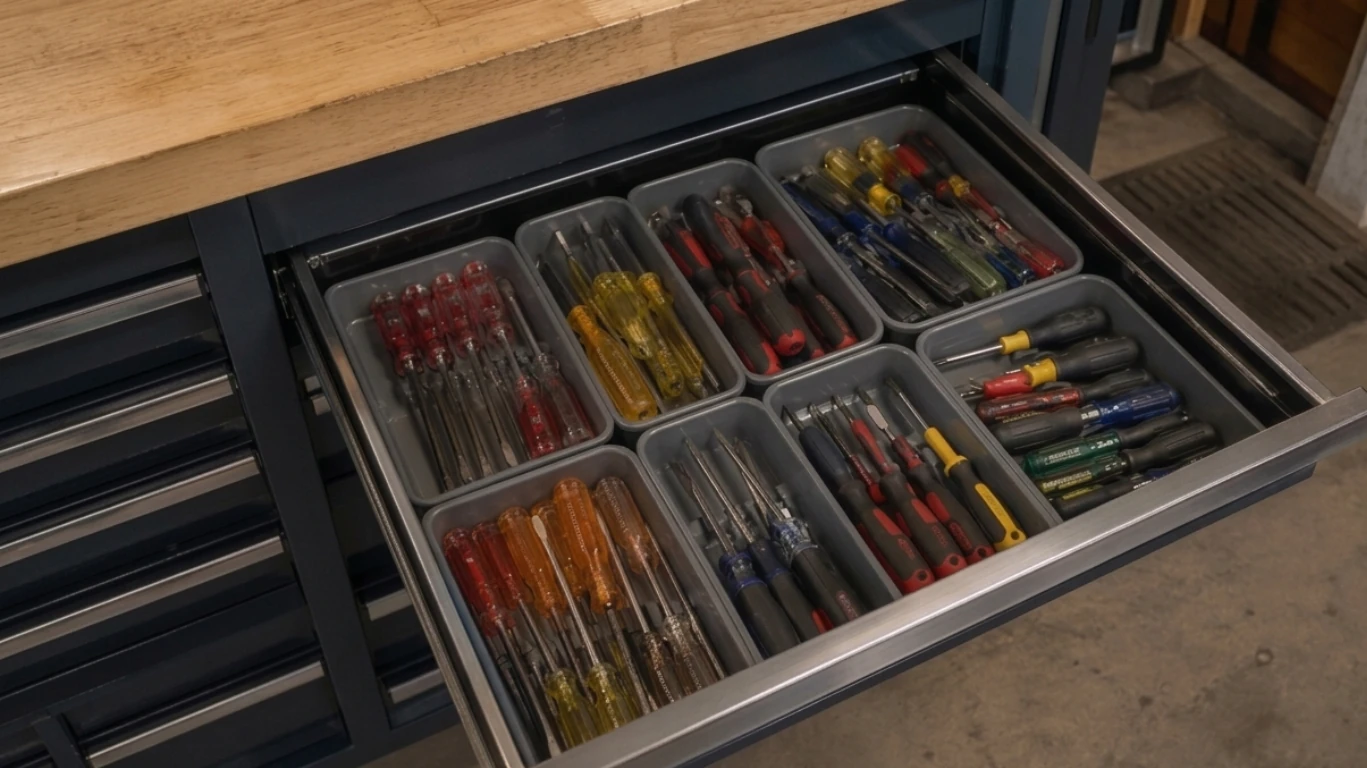
A screwdriver tray is often the easiest way to get control of a messy drawer quickly. Most trays work by spacing tools in rows, either with angled slots, individual holes, or stepped channels that separate handles so you can see what you have at a glance. If your screwdriver set is fairly stable and you want a simple solution that does not require building or cutting, a tray is usually the best starting point.
The main advantage of trays is speed. You drop the tray in the drawer, sort by type or size, and you are done. Trays also make it easy to pull the organizer out when you want to clean the drawer or rework your layout. For many home garage toolboxes, that simplicity is exactly what makes trays effective.
The drawback is stability. In drawers that get opened and closed often, trays can slide, rotate, or bunch up, especially if the drawer liner is slick or if the drawer is not packed tightly. Trays can also waste space when they are not sized well for your drawer, and some designs struggle with longer screwdrivers or bulky handles that need more spacing.
If you go the tray route, focus on fit and usability. Choose a tray that matches your drawer depth, leaves room for your most used drivers, and keeps handle spacing comfortable enough that you can grab one tool without dragging two others with it. If your drawer is already fighting you with sliding and shifting, that is usually the sign to consider foam or a magnetic or modular setup in the next sections.
Foam screwdriver organizers
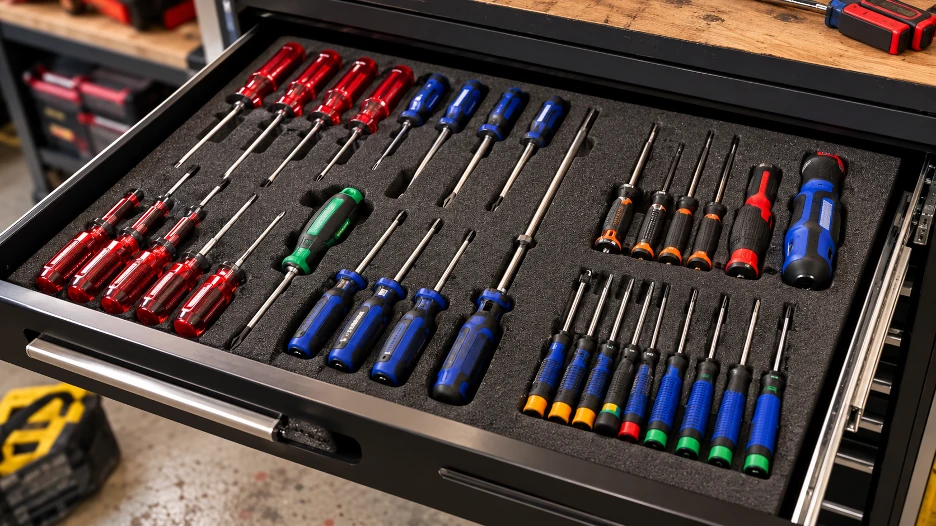
Foam organizers are a great option when you want a clean, fixed layout where every screwdriver has a clear home. They are popular in professional toolboxes because they make it obvious when something is missing and they keep tools from knocking into each other inside the drawer. If protecting tool finishes matters to you, foam also does a good job reducing contact and movement.
The tradeoff is time and flexibility. Foam usually requires measuring, cutting, and test fitting, and it can take a while to get the spacing right for different handle shapes and shaft lengths. It also becomes less convenient when your screwdriver set changes, since adding a new tool often means reworking the layout or cutting a new section.
Foam tends to work best when your screwdriver set is mostly stable and you want a long term layout that stays consistent. If you like reorganizing your drawers as your tools evolve, magnetic or modular setups are often easier to adjust while still keeping everything stable.
Magnetic and modular screwdriver organizers
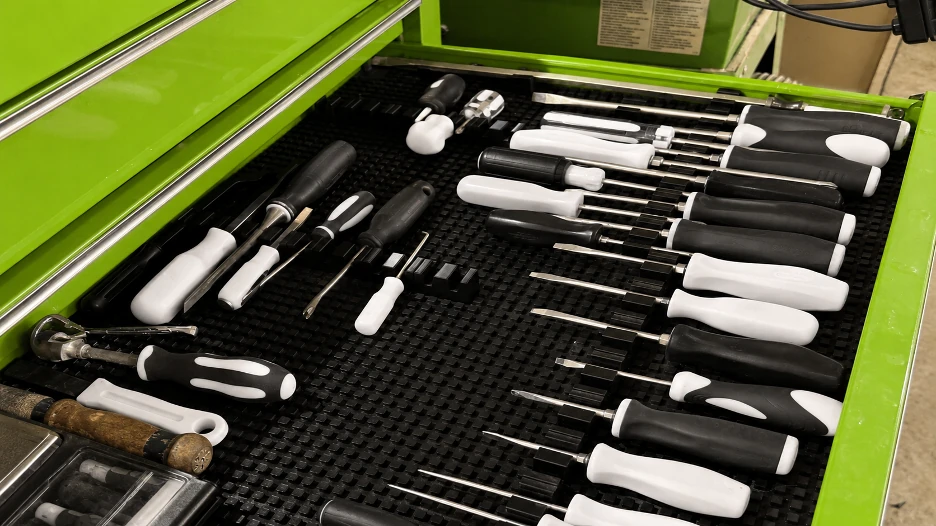
Magnetic and modular organizers are usually the best fit for toolbox drawers that get opened and closed often, especially when you are tired of trays shifting or tools sliding out of place. The core benefit is stability. A good magnetic setup helps keep your layout consistent, so you can build muscle memory and reach for the right screwdriver without digging around or re-sorting the drawer.
They also work well when your tool collection is still growing. Instead of committing to a fixed layout like foam, you can adjust spacing, move sections around, or expand the setup as your needs change. That flexibility matters in real toolboxes because most people add drivers over time, and even a small change can make a fixed organizer feel outdated.
The idea is simple: you start with a base mat, then add organizer attachments that match what you want to store, including screwdriver organizers. That way, you get a stable foundation with a layout you can still change later.
DIY screwdriver organizers
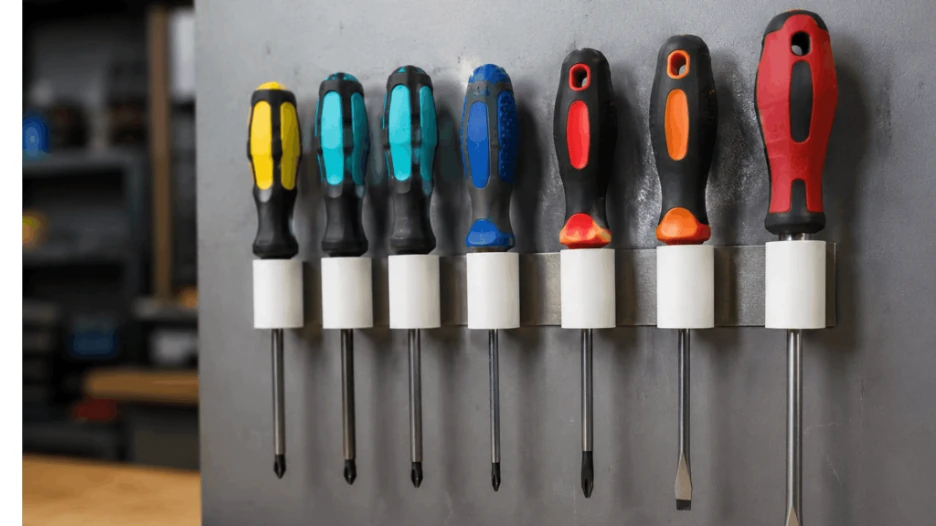
DIY organizers can be a great option if budget is your main constraint or you enjoy building a setup that matches your drawer perfectly. A good DIY solution can also be surprisingly efficient because you can design it around your exact screwdriver mix, including stubbies, long drivers, and odd handle shapes that do not fit standard organizers well.
The biggest mistake with DIY drawer organizers is building something that looks organized at first but does not stay organized. If the organizer slides, tips over, or shifts when the drawer moves, you will end up redoing it. The other common issue is flexibility. A DIY layout that is too exact can become frustrating when you add a few new screwdrivers, since you may have to rebuild the entire insert.
The best way to approach DIY is to design for stability and change. Leave a little extra space, keep the layout easy to modify, and make sure the organizer has a way to resist movement inside the drawer. If you get those fundamentals right, DIY can work well and still feel clean and intentional.
What makes a screwdriver drawer easy to use
Even the best screwdriver organizer will not feel complete if you still have to pause and search every time you open the drawer. Labels solve that problem by making your layout easier to follow at a glance, especially if you store multiple screwdriver types, mix in bit drivers, or share the toolbox with someone else. They also make it much easier to put tools back in the right spot, which is what keeps a drawer organized after the first week.
A good labeling setup does not need to be complicated. The goal is to make the drawer easy to understand, so you spend less time looking and more time working. This is where removable options like magnetic toolbox drawer labels are useful because you can update your layout without leaving residue or committing to a permanent system. Here’s a guide on how to label your toolbox drawers.
FAQ
Verdict
The best screwdriver organizer for a toolbox drawer is the one that matches how your drawer behaves in real use. If you want a quick, simple setup and your tools do not shift much, a tray is usually enough. If you want a clean, fixed layout where every tool has a permanent home and you do not expect your set to change often, foam is a solid choice. If your drawer gets opened and closed constantly, or you want a setup that stays put and can be adjusted as your collection grows, magnetic and modular organizers are usually the most practical long term. DIY can work well when budget is the priority, as long as you build for stability and leave room to adapt later.