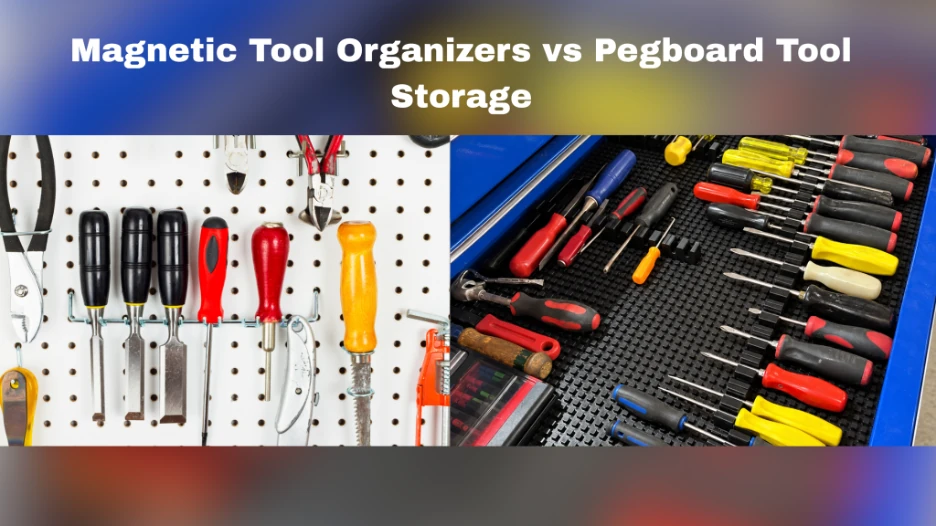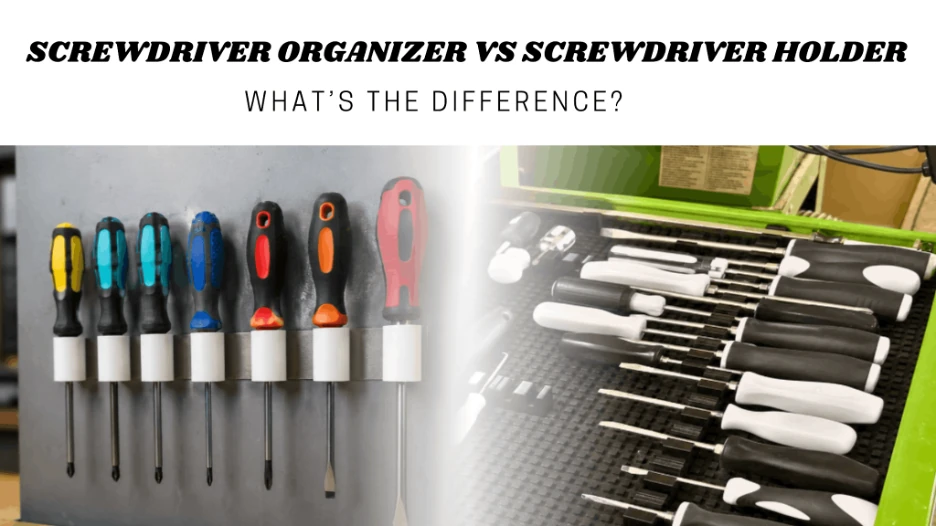

Screwdrivers are one of those tools that make a drawer look messy even when everything else is fine. They roll, stack, they end up hiding the exact screwdriver type that’s needed, and the drawer slowly turns into a pile that gets re-sorted every few weeks. The real question behind this comparison is not which looks nicer? It’s which setup holds up after hundreds of open-close cycles, after a few new screwdrivers get added, and after a rushed day when tools get tossed back in?
This article compares two popular fixes: a magnetic screwdriver organizer (a modular, tool-mat mounted system that holds drivers with magnets) and a foam insert (a cut-to-fit shadow foam layout). The goal is to make the tradeoffs clear, so the choice matches how a drawer is actually used. Check how to organize screwdrivers for proper organization.
A magnetic screwdriver organizer tends to be the better long-term answer for working drawers because it stays stable, packs tightly, and adapts when the tool set changes. Foam inserts shine when a fixed layout and missing tool visibility matter most, and the tool set is not expected to change much.
| Magnetic Organizer | Foam Organizer | |
| Fastest to set up | ✅ | ❌ |
| Easiest to change later | ✅ | ❌ |
| Best shadow board look | ❌ | ✅ |
| Best for busy drawers | ✅ | ⚠️ depends |
| Works in any drawer | ⚠️ depends | ✅ |
| Typical cost direction | Usually lower per capacity | Often higher upfront |
What is a Magnetic Screwdriver Organizer?
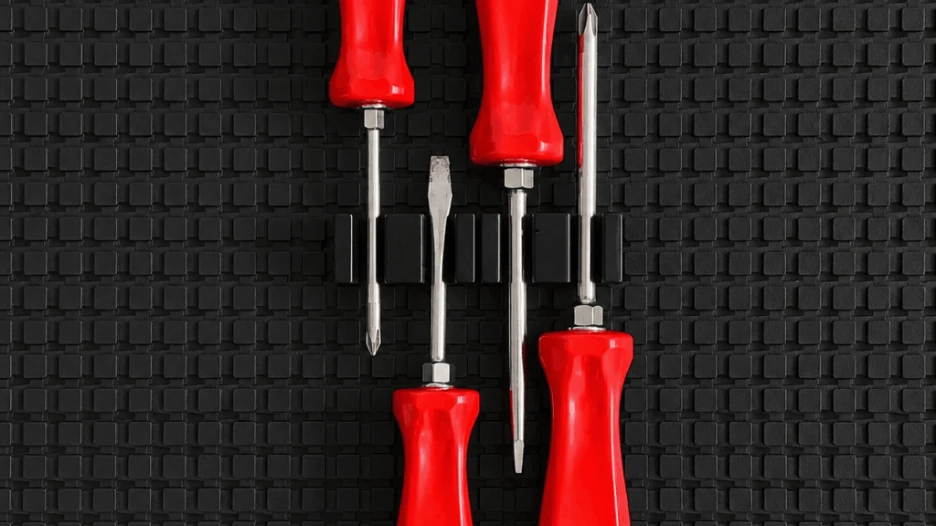
This style of magnetic screwdriver organizer is basically a modular system for a toolbox drawer. Instead of a single long rack, it uses repeated “holders” that clip into toolbox mats, so the organizer itself does not wander around the drawer. The holders are made from PETG and use neodymium magnets to keep screwdrivers from sliding and shifting.
The organizer comes in different sizes (for example, small and medium). It’s not “multiple products” to manage, it’s the same system sized to match different screwdriver handles and shafts. Each holder holds two screwdrivers, and the spacing is designed around placing tools 180 degrees apart to save drawer space.
The big practical note is compatibility: these attachments require toolbox mats. That requirement is also part of why the system stays stable instead of becoming another loose organizer sliding around in the drawer.
What is a Foam Insert?
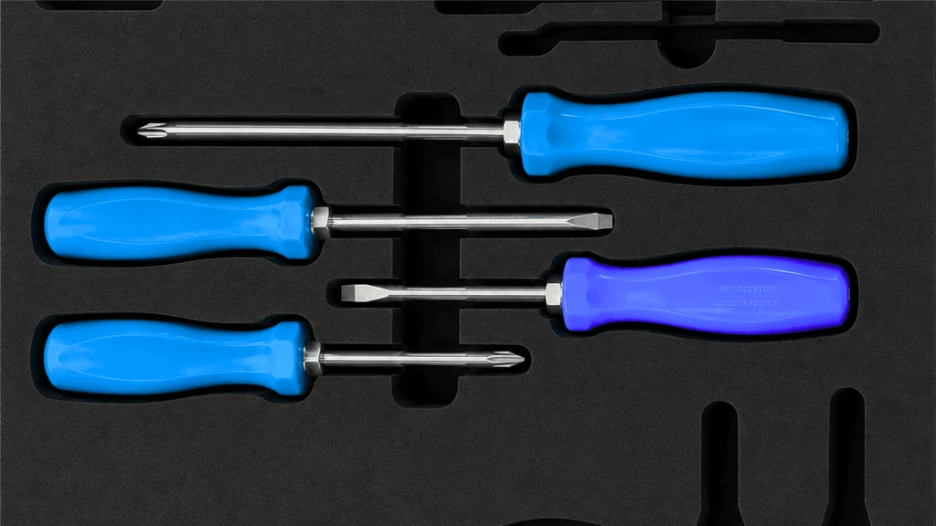
A foam insert is a custom, cut-to-fit approach. Tools get traced, pockets get cut, and each screwdriver ends up with its own dedicated outline. When people say “shadow foam,” this is what they mean: the drawer becomes a visual map of where every tool lives, and a missing tool is obvious the second the drawer opens.
Foam inserts usually appeal for two reasons. First, they look clean in a very satisfying, finished way. Second, they create a kind of built-in accountability, because empty pockets are hard to ignore.
The tradeoff is flexibility. Foam works best when the layout is meant to stay the same for a long time. When the tool set changes, foam either gets re-cut or it starts accumulating empty pockets and “temporary” storage that becomes permanent.
Differences between a Magnetic Screwdriver Organizer and a Foam Insert
The most important difference is what happens after the first setup.
Foam inserts are at their best when the screwdriver set is stable and the goal is a fixed layout with strong visual control. Once the cutouts are dialed in, the drawer stays consistent and missing tools stand out immediately.
The cost is time and commitment, because changing the layout later usually means more cutting.
Magnetic tool mat attachments are built around the opposite reality. Of course, drawers evolve, tools get added, swapped, and moved based on what gets used most as time goes on.
With the magnetic organizer, the layout can be adjusted by moving modules, and the neodymium magnets help keep screwrivers from shifting even when the drawer is used hard.
Another difference is the kind of mess each system prevents. Obviously, foam prevents tools from mixing by locking them into pockets.
While magnetic screwdriver organizer prevents tools from drifting and piling by holding them down and keeping the organizer anchored to the mat. In day-to-day use, those are slightly different problems, and one usually matters more depending on the drawer.
Similarities between a Magnetic Screwdriver Organizer and a Foam Insert
Both options reduce drawer clutter and make it easier to see what is missing. Both also speed up your work because tools return to consistent positions instead of ending up in a pile.
Both work best when you keep the layout simple. Group your daily-use drivers together, keep precision or specialty screwdrivers in their own section, and do not mix them with random stuff like picks and trim tools. The organizer helps, but the layout is what makes the drawer feel predictable.
If the whole toolbox needs a reset (not just screwdrivers), this is the clean system overview: How to Organize Your Toolbox
Pros and cons of Magnetic Screwdriver Organizers
Pros: They are designed for drawer stability using neodymium magnets, and the mat-mounted approach helps keep the layout consistent. They are modular, space-conscious, and designed for tight packing with the 180-degree orientation.
Cons: They require toolbox mats, so they are not a pure drop-in solution. They also take a little more setup than foam once foam is already cut, because the system works best when you plan the layout instead of tossing modules down randomly.
Pros and cons of Foam Inserts
Pros: Foam is the best option for the shadow board in a drawer look. It makes missing tools obvious, and it feels custom because it is custom. If you want one permanent layout and you like the idea of tool control at a glance, foam is hard to beat.
Cons: Foam takes time to cut well, and it is not fun to redo. If your tool set changes, you either recut sections or accept empty pockets and awkward add-ons. Foam also tends to show wear in real shops, especially if your tools are oily or dirty. Cost can be higher too, with some Kaizen-style foam sheets starting around 43.99 USD.
Conclusion
For most working toolboxes, the magnetic screwdriver organizer approach is the better long-term fit because it is designed to stay stable in a busy drawer and adapt as tools change. The combination of mat-mounted modules and neodymium magnet retention targets the most common real-world problem: a drawer that starts organized and slowly drifts back into a pile.
Foam inserts are still a great choice when the priority is a fixed layout with strong “missing tool” visibility and the screwdriver set is not expected to change much.
In short, magnetic wins for flexibility and durability of organization. Foam wins for visual control and a permanent custom look.