
Choosing between magnetic labels and sticker labels seems simple until you actually start using them on a toolbox, shelf, or storage bin. The best option depends on a few practical details, like whether the surface is metal or plastic, how often you reorganize, and whether you care about a clean permanent look or easy repositioning.
This article compares magnetic vs sticker labels in a straightforward way, focusing on what matters in real use: installation, durability, residue risk, and when each type makes the most sense for toolboxes, garages, and storage systems. By the end, you’ll know which label type fits your setup and why.
Magnetic labels are usually the easiest choice for metal toolboxes because you can move them around without scraping or cleaning anything. Sticker labels are usually better when you want something permanent or you’re labeling non-magnetic surfaces like plastic bins or wood. The best option depends on your surface, how often you reorganize, and how much you hate dealing with sticky residue.
| Spec / Feature | Magnetic labels | Sticker labels |
| Attachment method | Magnets hold the label to a metal surface | Adhesive backing sticks to the surface |
| Best surfaces | Metal toolbox drawers, steel cabinets, metal shelving | Plastic bins, wood, glass, painted surfaces (prep matters) |
| Repositioning | Simple, move anytime | Possible, but removal can tear or leave residue |
| Residue risk | Very low | Medium to high depending on adhesive and time |
| Best for toolbox | Usually yes | Sometimes, but can get annoying when you reorganize |
| Best for long-term fixed layout | Good | Excellent |
| Best for temporary labeling | Excellent | Good, but removal can be messy |
| Typical failure over time | Weak magnets on low-quality options, slipping if not designed | Edge lift, grime buildup, residue, fading depending on material |
What are magnetic labels?
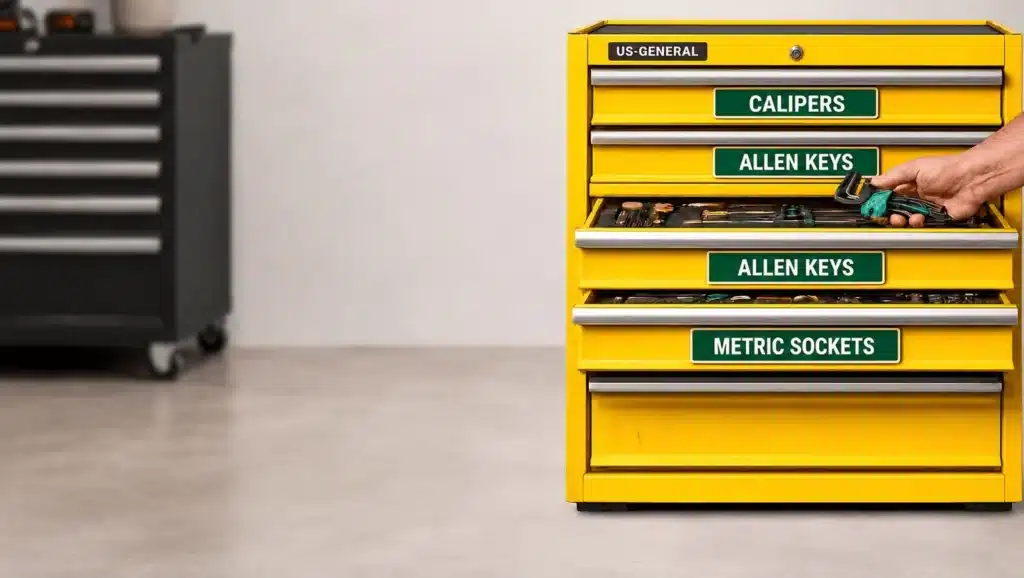
Magnetic labels hold to metal using magnets instead of glue. If you’re labeling a metal toolbox, this option usually feels the most practical because it matches what actually happens over time. Toolboxes evolve. You add tools, you change your drawer layout, and you rename categories as you get more specific.
Think about it this way. Today you label one drawer “Sockets”. In a month, you split it into “Metric sockets” and “SAE sockets”. With magnetic toolbox drawer labels, you just move or swap the labels and keep going. No peeling, no sticky cleanup, no leftover outlines.
Magnetic labels also work well when more than one person uses the same toolbox or workspace. If someone changes the layout, you can update labels quickly without damaging the drawer face.
What are sticker labels?
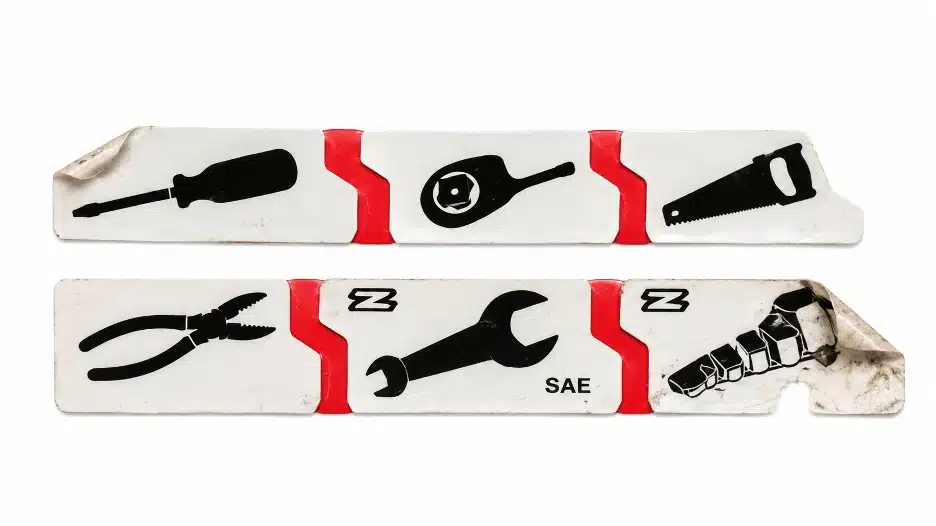
Sticker labels are what most people mean when they say labels. You peel the backing, stick it on, press it down, and you’re done. When sticker labels are applied to a clean surface and you don’t plan on changing anything, they can look really neat. They also work on more surfaces than magnetic labels, which is a big deal if you’re labeling plastic bins, wood drawers, or painted shelves.
Now here’s the part people discover later. Sticker labels feel permanent, and that is both the benefit and the downside. If you change your system, removing a sticker label can mean residue, torn edges, or a grimy border that makes the whole setup look older than it is.
So sticker labels are great when you’re confident the label will stay put for a long time, and you are okay committing to the category.
Differences between magnetic labels and sticker labels
The main difference is what happens when real life hits your organization system.
Magnetic labels are built for change. If your drawer categories shift, you shift the labels. That’s why they’re popular for garages, tool chests, and workshops where your setup grows over time.
Sticker labels are built for commitment. They shine when the category is stable. But if you’re the type who tweaks your setup, they can turn into a repeating chore. Every reorganization becomes: peel, clean, relabel, and hope it looks neat again.
Another difference is surface limitation. Magnetic labels basically require metal. Sticker labels can stick to many surfaces, but they demand better prep. If the surface is dusty, oily, textured, or damp, the sticker might lift at the corners or lose adhesion faster.
So the honest difference is this. Magnetic labels are simpler for metal toolboxes, sticker labels are more universal, but they often require more effort later.
Similarities between magnetic labels and sticker labels
Both types of labels can solve the core problem, which is making tools and supplies easy to find. Both can look professional. Both can be customized, whether that means printed text, colour coding, or specific category naming.
Also, both can fail if the underlying categories are too vague. If everything is labeled “misc”, you’ll still waste time. Labels work best when they match how your brain searches. For example, “Electrical” usually becomes “Connectors”, “Crimpers”, “Tape”, and “Heat shrink” once you get serious.
If you want your labeling system to feel done, the label type matters, but the category clarity matters just as much.
Pros and cons of magnetic labels
Magnetic labels are great if you want a labeling system that stays clean even when your toolbox changes. They’re easy to reposition, they typically do not leave residue, and they make reorganizing feel normal instead of annoying. For metal toolbox drawers, magnetic labels are usually the least stressful choice long-term.
The downside is that they need a magnetic surface. They also need to be made well. Cheap magnetic labels can feel weak, slide around, or fall off, especially in a busy workspace. If you go magnetic, you want labels designed specifically for drawers, not generic weak magnet sheets.
Pros and cons of sticker labels
Sticker labels are a solid option when you want a clean, permanent look, or when you’re labeling non-magnetic surfaces like plastic bins, wood shelving, or painted cabinets. They’re widely available and can be very tidy when applied carefully.
The downside is the change factor. If you reorganize, sticker labels can leave residue or tear, and repeated relabeling can slowly make your setup look messy. In high-touch areas like toolboxes, stickers can also lift at the edges or collect grime around the border.
Conclusion
If you’re labeling a metal toolbox and you expect your layout to evolve at all, magnetic labels are usually the better choice. They match the way toolboxes grow, and they let you improve your organization without turning it into a cleanup project.
If you’re labeling plastic bins, wood shelving, or anything non-magnetic, sticker labels often make more sense. They also make sense when you truly want a permanent label that will not move.
If you’re on the fence, use this simple rule: if you’ve reorganized your toolbox even once in the last year, magnetic labels will probably make you happier.