
The best screwdriver organization ideas make tools easy to find, remove, and put back. The right setup depends on whether you use a toolbox drawer, a fixed workbench, or a portable kit—and whether you need to store full-size, stubby, or precision screwdrivers.
These 12 ideas cover drawer layouts, wall storage, and compact options for everyday DIY and automotive work. Start with the space you have, then choose a setup that fits your tools without crowding the handles or hiding the tips.
Before You Choose a Screwdriver Storage Setup
Lay out your screwdrivers and group them by tip type, including Phillips, slotted, Torx, and Robertson where applicable. Separate stubby, long-reach, and precision drivers so you can see which tools need different storage.
For drawer storage, measure the usable width, depth, and clearance above the drawer bottom. Allow for the organizer’s height and enough space to grip each handle. For wall storage, check that long shafts have clearance below the rack and that tools can lift out without hitting a shelf.
Quick toolbox drawer solutions
If you keep your screwdrivers in a toolbox drawer, the goal is simple: stop them from sliding into a pile and make the right one easy to grab fast. The ideas below focus on drawer setups that are quick to put together and easy to maintain, even when you are working often.
1) Build a modular layout that stays in place
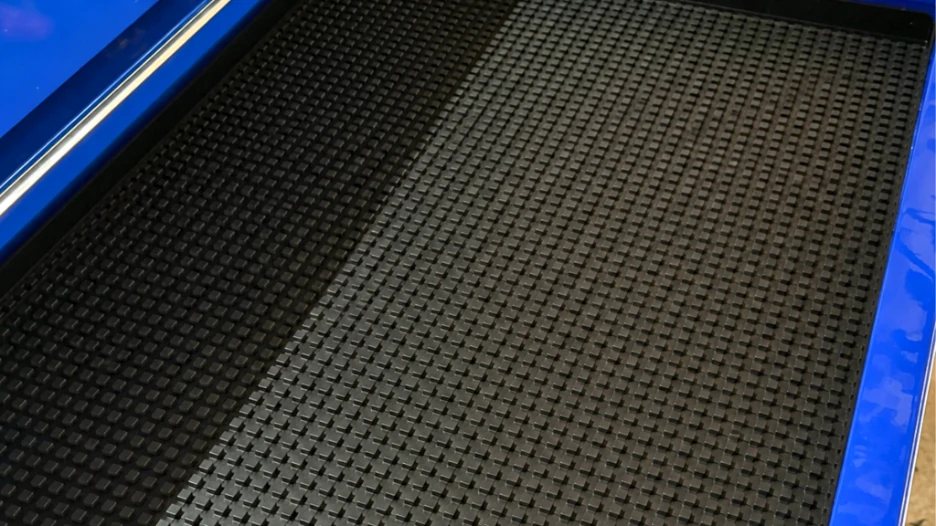
A modular layout lets you arrange screwdriver holders around the tools you own and adjust their positions as your collection changes. It is useful when a fixed tray leaves awkward gaps or does not suit your mix of handle sizes and shaft lengths.
Start by positioning your longest screwdrivers, then arrange shorter tools around them. Leave enough room to lift each handle without moving the tools beside it.
Our Modular Tool Mat provides a base for compatible organizer attachments. Check the mat dimensions against your usable drawer space, then choose attachments to suit your tools. Mats and attachments are sold separately.
2) Use magnetic screwdriver organizer attachments
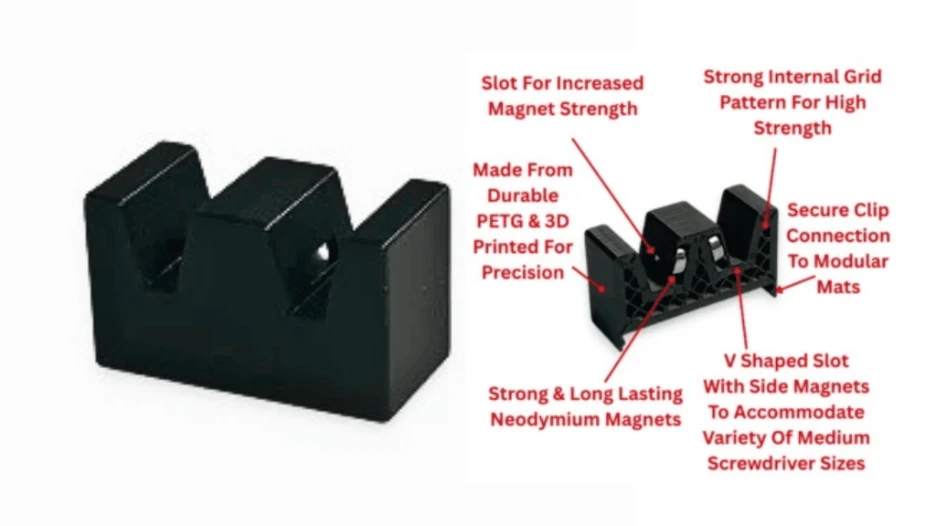
Magnetic screwdriver organizer attachments give individual tools a defined position within your drawer layout. Choosing the right size matters: a holder should suit the part of the screwdriver it supports while leaving the handle accessible.
Compare the listed dimensions of our small, medium, and large screwdriver organizers with your tools before ordering. Our organizers are designed to fit most small, medium, and large screwdrivers.
Set up a small batch of screwdrivers first and test your layout for the optimal configuration. Adjust the spacing before filling the rest of the drawer.
3) Organize by daily screwdrivers vs specialty screwdrivers
Not all screwdrivers deserve the same level of access. A simple way to keep things tidy and faster during repairs is to separate the ones you reach for all the time from the ones you only use occasionally.
Put your daily drivers in the easiest spot to grab, usually the front of the drawer or the section closest to your dominant hand. These are typically your most used Phillips and flathead sizes. Then group specialty drivers in their own area, such as stubby drivers for tight spaces, long reach drivers, precision screwdrivers, and any specialty tips you only need once in a while. This small change reduces drawer clutter because you stop shuffling through rarely used tools every time you just need a common driver.
4) Save space by alternating handle directions
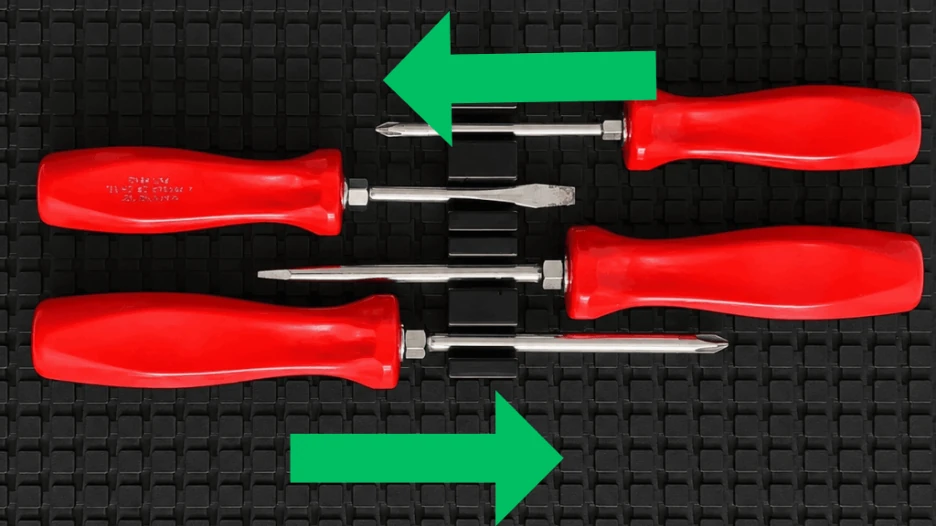
Arrange neighboring screwdrivers in opposite directions so a wide handle sits beside a narrower shaft. Depending on the shape of your tools, this can reduce the width needed for a row without stacking screwdrivers.
Try the layout with your actual collection before fixing holders in place. Leave enough space to grip each handle, and keep every shaft and tip inside the usable drawer area.
This works especially well when handle width is the main obstacle in a shallow drawer. Use holders or dividers to maintain the arrangement; alternating directions alone will not stop loose tools from rolling.
5) Use a divided tray or foam insert
A divided tray is a simple screwdriver drawer organizer when you want to separate tools without building a modular layout. Choose channels long enough for the shafts and wide enough for the handles, then group screwdrivers by tip type or size.
For a collection that rarely changes, a foam insert provides a fitted space for each tool. Lay out the screwdrivers before cutting, leave material between the outlines, and include finger openings so handles are easy to lift.
Choose a tray if you regularly rearrange your tools. Consider foam if you want a consistent layout that makes missing screwdrivers easy to spot.
Wall and bench storage ideas
If you work at the same bench often, wall and bench storage can be even faster than a drawer. The big advantage is visibility. You can see what you have, grab it in seconds, and notice right away when something is missing.
6) Create a screwdriver zone on a pegboard
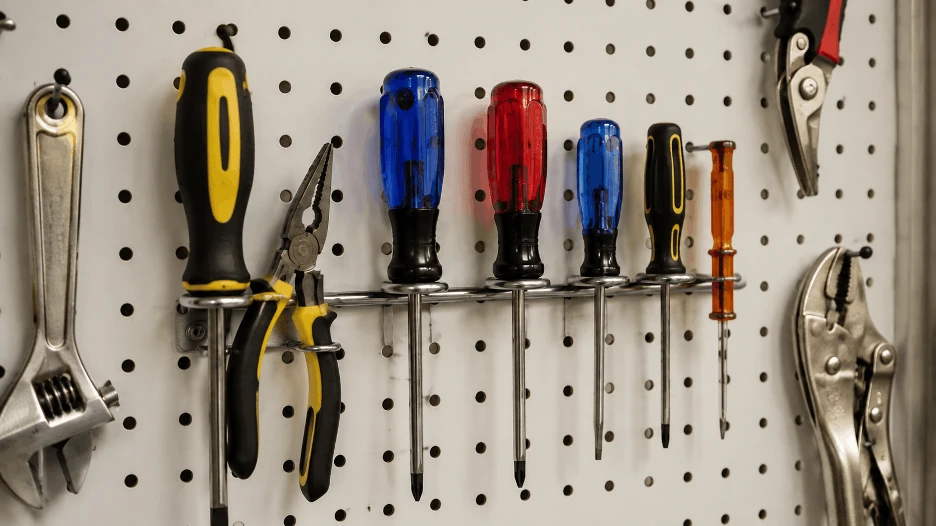
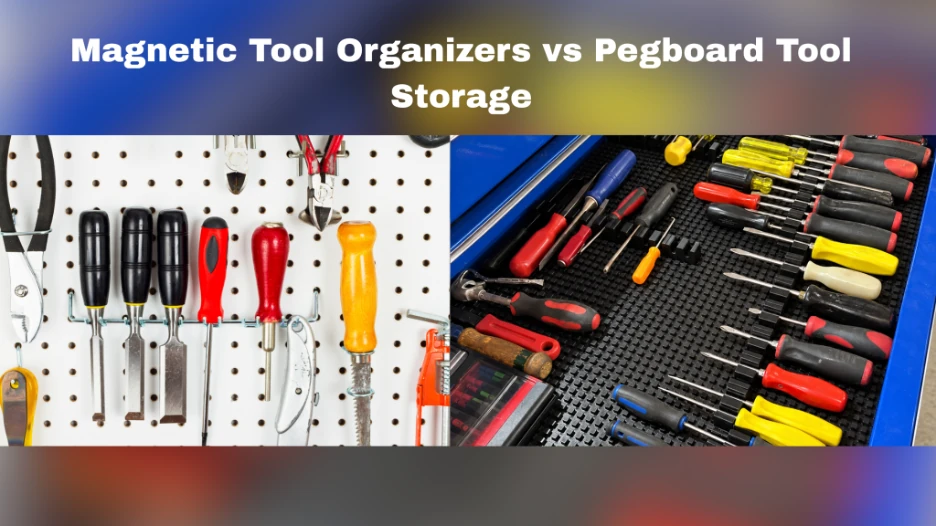
Use a dedicated pegboard screwdriver rack to keep tools visible without occupying drawer space. Group similar tip types together and arrange each group by size so you can identify the screwdriver you need.
Check the rack openings before buying: shafts must fit through, while handles need enough support to prevent tools from slipping through. Leave clearance beneath the rack for long screwdrivers and above it for lifting them out.
Position frequently used tools within comfortable reach. Keep the rack clear of shelves, cables, and other hanging tools that could obstruct removal.
7) Use a wall rack or magnetic strip near your workbench

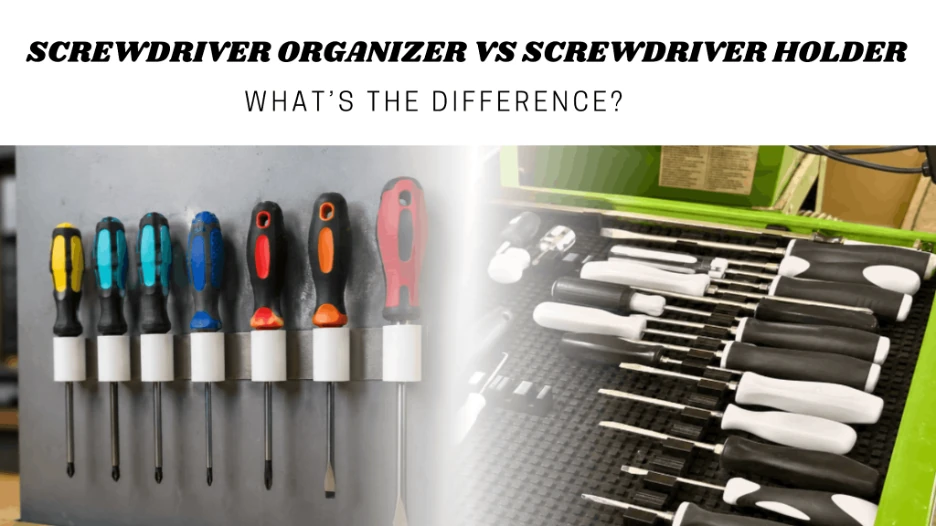
A wall rack supports screwdrivers mechanically, while a magnetic strip holds suitable exposed metal against the magnet. Both can keep a working set close to your bench, but they suit different tool shapes.
Choose a rack when your screwdrivers have bulky handles or covered shafts that limit magnetic contact. A magnetic strip can work well with exposed steel shafts, provided each tool stays securely in place.
Mount the holder according to its instructions and test your tools individually. Leave enough space to remove one screwdriver without knocking its neighbors, and position exposed tips away from areas where you could brush against them.
8) Make a DIY wooden screwdriver holder
A wooden screwdriver holder lets you customize the spacing around your own tools. It can be mounted beside a workbench or incorporated into a stable bench stand.
Lay out your screwdrivers first and mark positions based on handle width. Size the openings so shafts pass through while handles remain supported, leaving enough room between tools for your fingers. Smooth the edges and check the fit before mounting or using the holder.
Do not assume one hole size will suit the entire collection. Slim precision drivers and unusually shaped shafts may need separate openings or a different holder.
Small space and mobile options
If you work in a tight garage, share a space, or take tools on the go, the best organization is usually the one that packs down quickly and still keeps your screwdrivers easy to find. These ideas focus on staying organized without needing a full wall or a large toolbox.
9) Make a grab and go screwdriver kit
A tool roll or zippered case keeps a small screwdriver set together for driveway repairs, household jobs, or work away from the garage.
Choose the screwdriver types and sizes you actually use, then check that the pockets accommodate their handle widths and shaft lengths. Include a stubby driver if tight spaces are common in your work, and keep loose interchangeable bits in a separate fitted holder.
Before packing the kit away, check that it closes without forcing screwdriver tips against the fabric or zipper. Dedicated pockets make it easier to spot a missing tool before you leave a job.
10) Store precision screwdrivers separately
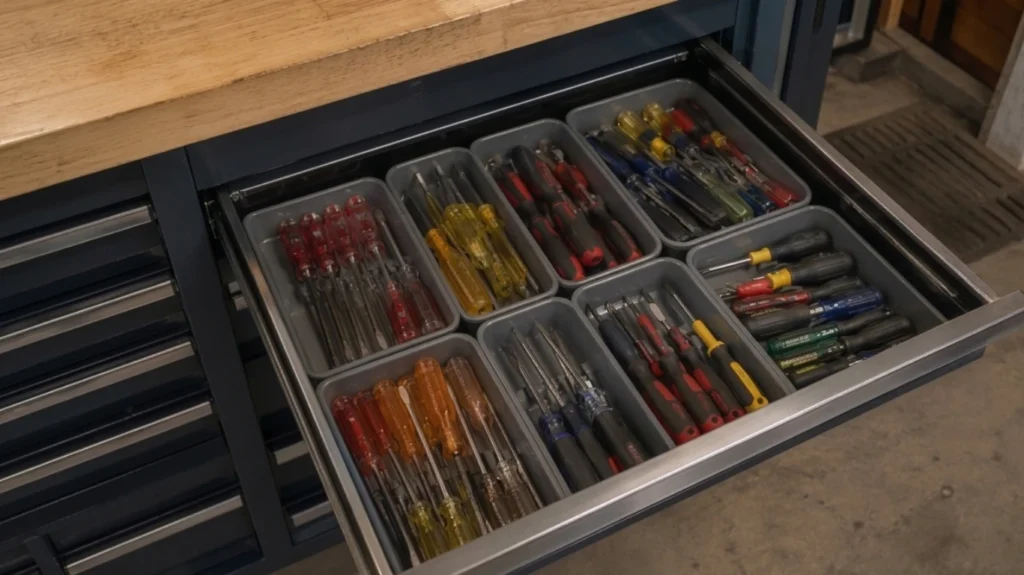
Precision screwdrivers get lost easily because they are small and they do not belong in the same space as full size drivers. If you mix them together, they end up buried under handles and other tools. Give them their own small spot, like a compact holder, case, or a dedicated section of a drawer.
Keeping them separate also protects them from damage, which matters if you use them for delicate interior trim screws or small electrical work.
11) Label your toolbox drawers so tools go back correctly
Even the best layout breaks down if tools do not go back where they belong. Labels solve that problem because they remove the guesswork. When a drawer is clearly labeled, you put things back faster and you are less likely to toss tools into the nearest open space.
Custom Magnetic Toolbox Drawer Labels are a simple way to keep your system consistent over time, especially if you have multiple drawers or you share your toolbox.
12) Use a simple reset routine to keep it organized
Most organization problems are not caused by the setup. They are caused by what happens after the job. A quick reset routine fixes that. At the end of a repair, take a short moment to return screwdrivers to their assigned spots and clear any tools left on the bench.
If you do this consistently, your system stays organized without needing constant rework, and the next job starts with everything where you expect it to be.