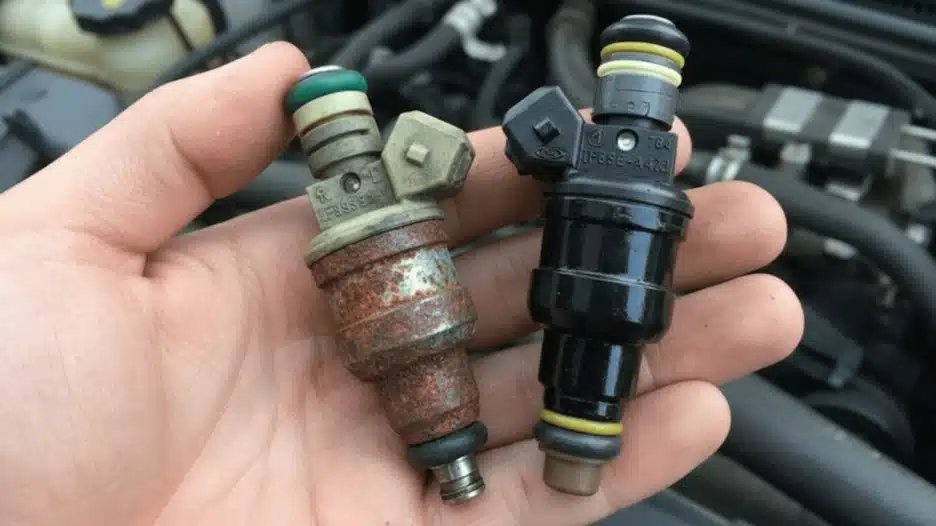
Did you know that clogged fuel injectors are responsible for about 15% of engine misfires? A fuel injector does pretty much exactly what it sounds like it does. It sprays or injects a finite amount of fuel into your car’s engine at a specific time.
In this article, we’ll examine nine signs of a bad fuel injector, along with tips on diagnosing and cleaning it properly.
You will likely experience one of the following if your injector is going bad.
Symptoms of a Bad Fuel Injector
1. Engine Performance Issues
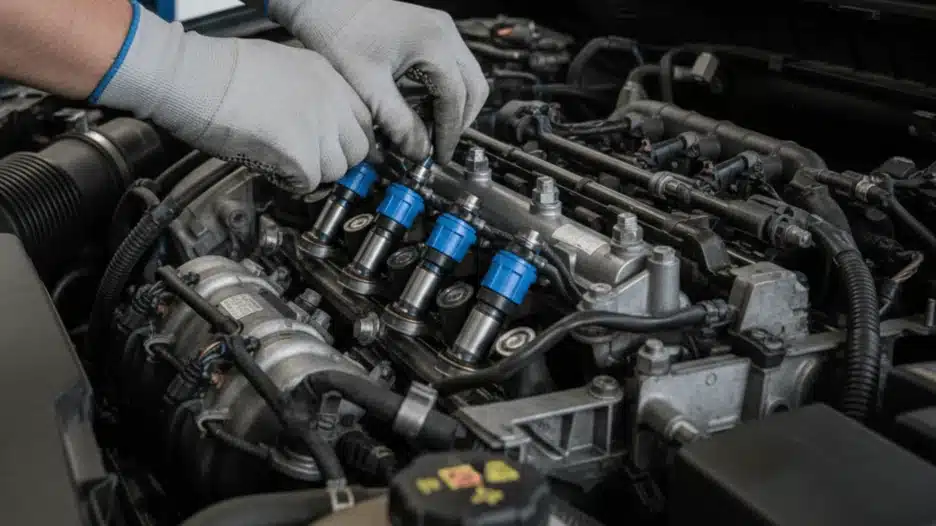
The first thing you will notice with a faulty fuel injector is engine performance issues. You could be experiencing misfires and a rough idle. This is where the engine shakes, stumbles, and may feel like it’s misfiring at idle or low speed. This happens because one cylinder isn’t getting the correct fuel, causing an imbalance.
2. Hesitation and Stumbling on Acceleration

Sometimes your engine might be hesitating, or stumbling on acceleration. When you press the gas pedal, the car starts to jerk and stumble instead of accelerating smoothly. A clogged fuel injector can’t spray the needed fuel for a quick response, and that can lead to hesitation and stumbling on acceleration.
3. Loss of Power and Poor Performance

The other symptom is that you might be having loss of power and poor performance. The car feels sluggish and struggles to maintain speed, especially uphill.
Fuel economy and emission-related problems are also indicative of a failing fuel injector. You might be having decreased fuel mileage, meaning your miles per gallon will decrease. This is a classic sign of a bad fuel injector.
4. Fuel Economy and Emission-Related Problems
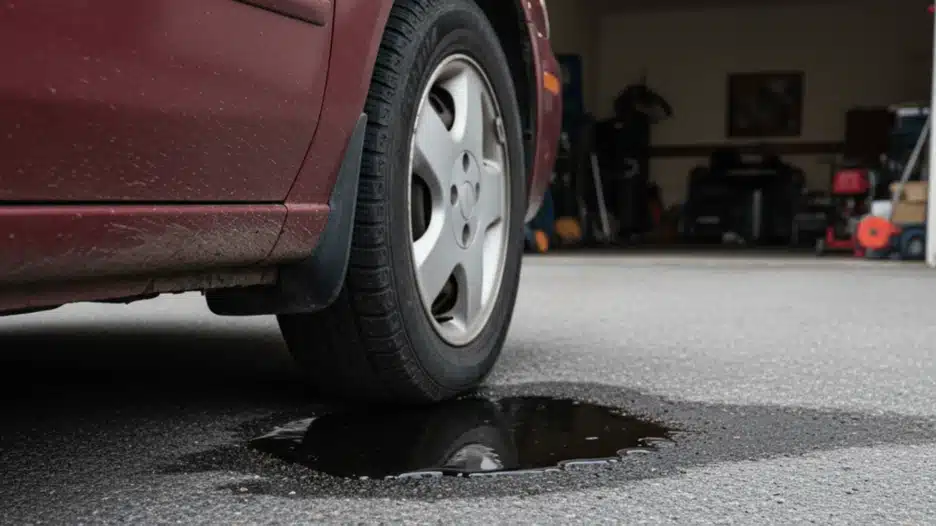
A leaky fuel injector drops fuel consistently, thereby wasting it. A clogged fuel injector causes the engine to run lean, making the ECU add more fuel to compensate, also reducing efficiency.
5. Strong Smell of Gasoline

You might be experiencing a strong smell of gasoline. This can be caused by an external leak from the injector itself or, more commonly, by an internal leak where a faulty injector drips fuel into the cylinder.
This not only creates the smell but can also “wash down” the cylinder walls, damaging your engine.
A bad fuel injector can also cause an incorrect air-fuel ratio, leading to high hydrocarbon or high carbon monoxide emissions. So that will lead to a failed emission test.
6. Check Engine Light and Error Codes

There are also some visual clues that can tell you if the fuel injector is going bad. The first visible indication is a check engine light that is illuminated on your dashboard. The car’s computer is very sensitive to misfire and fuel trim issues.
Common codes include:
● P03000 random or multiple misfire
● P 0301 up to P 036 cylinder-specific misfire
● P0301 indicates misfire for cylinder number one.
● P 0171 indicates the system is too lean.
● P 0172 indicates the system is too rich.
7. Engine Knocking or Pinging
Engine knocking or pinging can also be caused by a faulty fuel injector. A clogged fuel injector, which causes lean combustion, can cause the air-fuel mixture to burn too hot and too early, creating a pinching sound from the engine under acceleration.
8. Ticking or Clicking Noise
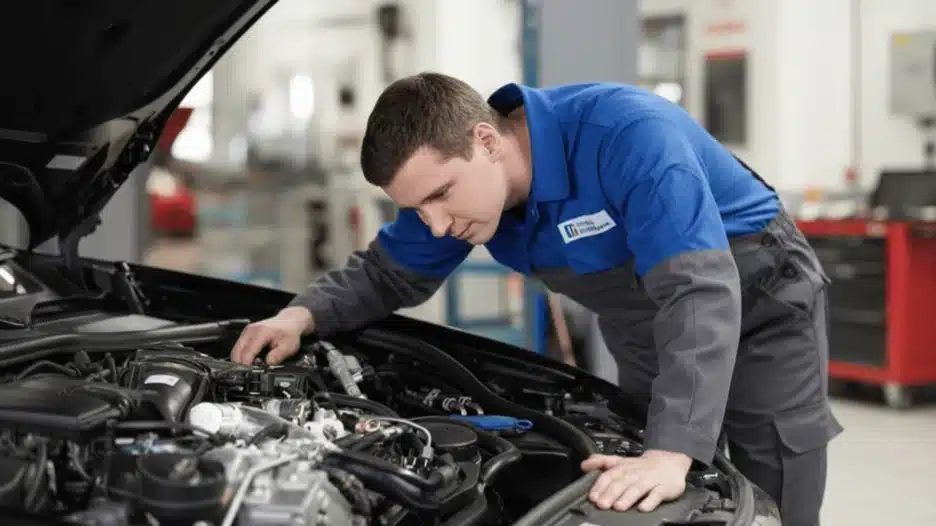
Ticking or clicking noises can also signal a bad fuel injector. While injectors normally make a soft ticking sound, a noticeable loud click from one injector can indicate it is failing internally or it is sticking.
9. Starting Difficulties

Starting difficulties can also be attributed to a faulty fuel injector. A severely clogged fuel injector may prevent the engine from starting at all, as there is not enough fuel in the cylinder for combustion. More commonly, it just takes longer cranking to start. So, difficulty starting can also be indicative of a fuel injector-related problem.
Causes of Fuel Injector Failure
Clogging from Contaminants
The number one enemy of a fuel injector is dirty fuel. Microscopic rust, dirt, and debris from a gas tank or fuel lines can pass through the fuel filter and then clog the fuel injector’s tiny screen, or it might clog the nozzle.
So dirty fuel is the number one cause of a fuel injector clogging.
Infrequent fuel filter changes can accelerate this. A clogged fuel filter can’t protect the injectors, allowing contamination to pass through.
Internal Wear
Internal wear is a common cause of failure. The injector’s precise needle and seat can wear down over millions of cycles. This leads to inaccurate fuelling and can eventually cause a fuel leak.
Electrical-Related Problems
Electrical-related problems can also cause an injector to fail. The solenoid valve is an electromagnetic coil that opens and closes the fuel injector needle. It can fail due to heat and age, causing an open or short circuit, and this will make the fuel injector completely inoperative.
Carbon and Varnish Buildup
Carbon and varnish buildup inside a fuel injector is a common problem. When the engine is shut off, residual fuel left in the injector tip is baked by engine heat. This “heat soak” cooks the fuel, leaving behind hard carbon deposits that can clog the injector over time.
This is worse with low or poor fuel quality. As we mentioned earlier, cheap fuel, low nitrogen levels in gas can leave injectors dirty, and accelerated carbon buildup inside injectors can lead to clogged injectors.
How To Clean a Dirty Fuel Injector
Some fuel injector problems might be fixed by simply using a fuel injector cleaner. Some fuel injector cleaner solutions can run through the fuel system via a specialized machine, bypassing the fuel tank, thereby cleaning any carbon deposit or clogging material inside the fuel injectors.
Sometimes, fuel injectors might need to be cleaned by using ultrasonic fuel injector cleaners. Injectors are removed and placed in an ultrasonic bath that uses sound waves to violently shake carbon and varnish loose.
This is a very highly effective method of cleaning fuel injectors. The advantage is that it can restore the fuel injector to a new-like performance for a fraction of the cost of a replacement. Now the disadvantage is that it requires removing the fuel injectors and won’t fix any mechanical or electrical failures as well.
Fuel Injector Replacement and Prevention
When it comes to fuel injector replacement for electrically failed injectors or internally worn-out, leaky fuel injectors that cannot be cleaned and repaired, you should go ahead and replace them.
Replacement is usually done in a set. It is often recommended to replace all injectors at once, especially in high-mileage cars. If one has failed, others are likely near the end of their lifespan as well.
Always use O-rings and seals. Buy new, original equipment manufacturer-approved parts or from a reputable market, and then some injectors might require coding and programming. On many modern cars, new injectors must be coded and programmed into the ECU using a diagnostic scanner, or the ECU can compensate for minor manufacturing variances.
So these are some of the things that you can do if your fuel injector is failing. Always remember, prevention is key. Use top-tier gasoline. Brands that meet top-tier detergent standards help keep injectors clean and change fuel filters very regularly. Follow your manufacturer’s recommended intervals.
If the fuel filters are regularly replaced, then it is more likely that fuel injectors will be receiving clean fuel and won’t run on fumes. Always keep your tank at least a quarter full to help prevent sediments from being sucked into the fuel pump and supplied to the fuel injectors.
Don’t forget to use quality fuel injector cleaners. If you suspect that fuel injector performance is going down, you can use a reputable cleaner, and you can apply it every 3,000 to 5,000 miles, which can help prevent carbon buildup inside the fuel injectors.
Conclusion
A bad fuel injector can cause various issues in your car engine as stated, but avoiding those signs and symptoms can be more dangerous, leading to a bigger problem. It is better you figure out what the problems are, and fix it as at when needed.
However, if your fuel injector is beyond cleaning, getting a new one or replacing them is a better option, which will also restore the normal operation of your vehicle.