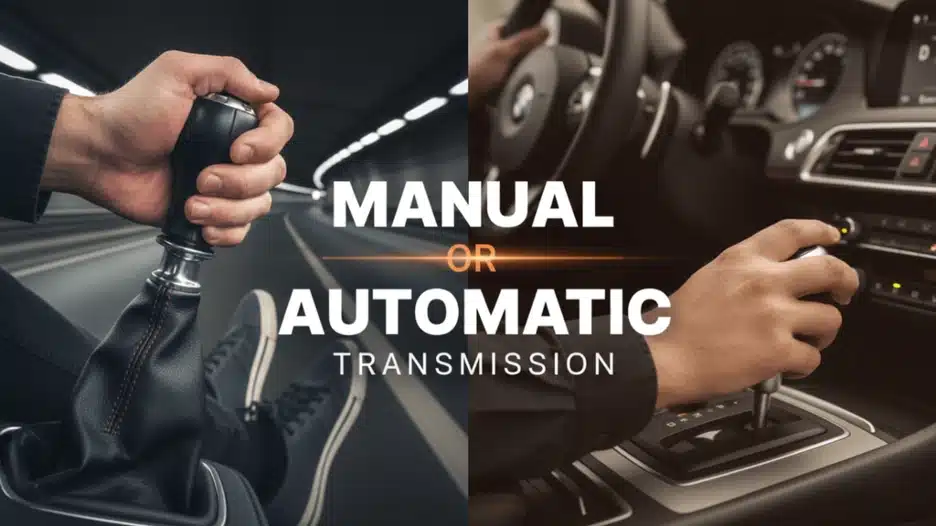
Throughout life, there are some very important decisions that we have to make like whether or not to go to college after high school, choosing where to live, but probably most importantly: an automatic or manual transmission for your car?
The opinions on automatic vs manual transmissions in cars have been split for quite some time. Back in the day, when I was first starting to get into cars, it would seem that if you were even remotely interested in cars and modifying cars, you had to have a manual transmission. It was the only way.
But as the years have gone on, technology and automatic transmissions have evolved, some people have started to switch their view when it comes to what transmission is found in their car. So now, let’s talk about it: automatic versus manual transmissions. Which is actually better right now?
Why People Love Manual Transmissions
If you ask someone who swears by manual transmissions why they love a manual, you’ll probably get an answer along the lines of being in full control of the car, always. This is understandably one of the most common reasons why people love having a manual transmission in their cars.
It makes you feel more connected. The driving experience is really unlike any other. You are telling the car what to do, when to shift, when not to shift. Manual transmissions provide you with that direct control over each gear selection.
If you’re good at driving manual transmission cars, it allows for precise and immediate control of these shifts. This can be beneficial in high-performance driving scenarios such as racing on the track or tearing up your local road.
On top of all that, it just feels badass. Driving manual transmission cars feels cool, it feels fun. You’re doing something that not a lot of people can do anymore, and it’s undoubtedly more engaging since it literally requires you to be engaged with the car. It creates a much different driving experience compared to anything else.
Why Automatics Took Over
It should be no surprise that it has become harder and harder to find modern cars that offer a manual transmission. They are being phased out slowly but surely. The general public, the majority of people who are purchasing cars nowadays, don’t want manual transmission vehicles.
Looking back in history, almost all vehicles used to be manual. Around the 1940s to 1950s, the automatic transmission started to become more popular. Advancements like torque converters and planetary gear sets improved the performance and reliability of this new-age transmission.
By the 1980s, with the introduction of computer controls in vehicles, automatic transmissions became more sophisticated and reliable, offering better fuel efficiency, smoother shifts, and overall better reliability. And most importantly, you didn’t have to fiddle with a little stick in the middle of your car the entire time while driving.
Modern Automatic Transmissions
Advancements in automatic transmissions didn’t stop in the 80s. They kept getting better, adding more gears, better fuel economy, smoother and faster shifts, and innovations like the dual-clutch transmission, which really changed everything.
Some incredible automatic transmissions today include the GR6 found in the R35 GTR, the ZF8HP, and the Toyota Supra’s DSG PDK. These transmissions are known for incredibly fast and smooth shifts between gears literally within milliseconds.
These fast shift times are one of the reasons some people have started to change their stance on automatic versus manual. With paddle shifters and other controls, you can still feel connected to the car and, in a sense, experience some of what a manual car offers.
The Pros and Cons
Automatic transmissions are still the favorite for those who prioritize ease of use and comfort. But they do have drawbacks. It might cost a lot altogether, and if something goes wrong, it might be harder and cost more to fix compared to manual cars.
Weight can also be a factor, since there’s more going on with gears and computers controlling everything. That added complexity can make automatic transmissions heavier than manual ones.
On the other hand, manual transmissions have mostly stayed the same. They continue to offer an engaging driving experience, but manufacturers haven’t invested nearly as much time and money into evolving them.
Which Car Lasts Longer: Automatic or Manual
A manual gearbox has very few components. So, repairing a manual gearbox is way cheaper than an automatic gearbox.
With an automatic transmission, there are so many components, and the more components you have in a system, the higher the chance of something failing. Overall, if you’ve got a manual car and you know how to drive it well and take care of it, a manual car will be more reliable and last longer than an automatic car.
Which is Cheaper to Repair: Manual or Automatic
Repairing a manual gearbox is much cheaper than an automatic gearbox because there are fewer components. However, there is caution: if you give your manual car to someone who does not know how to drive it, they may damage the clutch, pressure plate, or other clutch system components, which can be very expensive to replace.
Automatic transmissions, on the other hand, are more complex. With more components comes a higher chance of something going wrong, making repairs more costly compared to a manual.
Extra for Car Enthusiasts
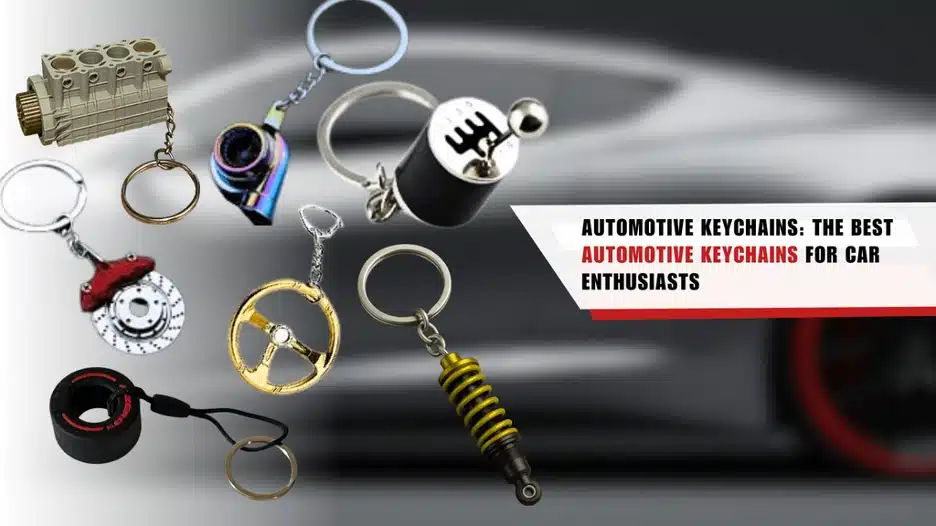
For car enthusiasts, either you choose an automatic or a manual car, you need this as an add-on accessory for your car. Check out the Movable 4-Cylinder Engine Keychain. The keychain is an exact replica of a 4-Cylinder engine with live moving pistons. It is compatible enough to fit perfectly in your pocket, attached to your car key or key fob without scratching your car’s dashboard.
Conclusion
The choice between automatic and manual cars comes down to your personal preferences and the way you drive. Manual transmissions will always offer a more engaged and controlled driving experience, while automatics provide convenience and, in some cases, performance with their new technology.