
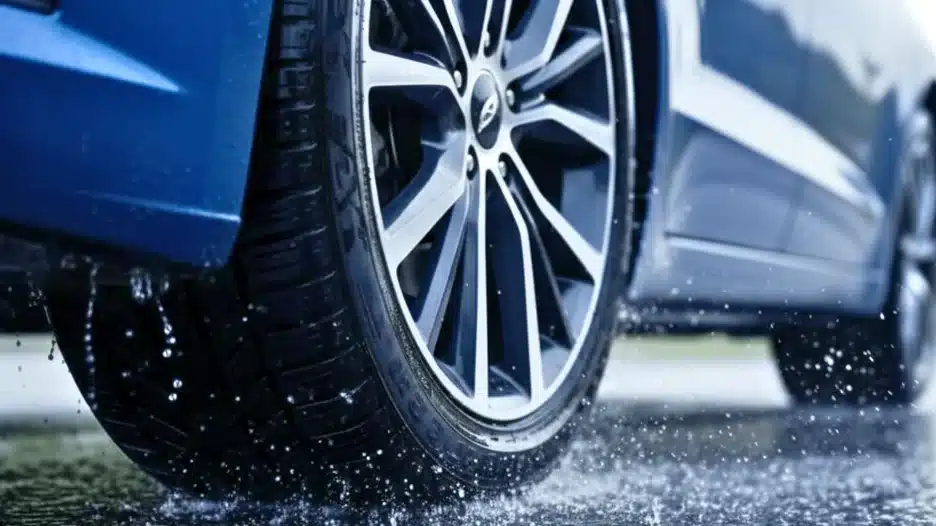
When rain falls on the road, the risk of hydroplaning increases, threatening your tire grip and your safety. This phenomenon occurs when the layer of water, poorly dispersed under the wheels, causes a loss of vehicle control. What do you do when hydroplaning? What is the average speed to maintain? How can you adjust your driving and braking to avoid an accident?
Aquaplaning, also known as hydroplaning, occurs when a vehicle’s tires lose traction on a wet road. Lacking grip, the vehicle veers off course and slides, as if it were gliding over the surface.
Avoiding it is the best preventative measure you can follow, but it’s true that it’s not always possible, and once you’re behind the wheel and experiencing it, the best thing to do is know how to react.
Maintaining good speed and ensuring your tires are in good condition reduces the risk of hydroplaning. A few simple actions can help you quickly regain control of your vehicle when hydroplaning. It’s best to know them before getting behind the wheel.
What is Hydroplaning?
Hydroplaning, also called aquaplaning, is a phenomenon that occurs in wet weather. A vehicle’s tires are no longer able to properly evacuate the film of water between the wheels and the suface of the road, resulting in a loss of traction.
When this phenomenon occurs, the vehicle begins to “hydroplane”: its tires slide on the water, instead of maintaining contact with the road.
This very dangerous incident poses a risk of:
- Loss of vehicle control: the driver may lose steering, acceleration, and braking, making their vehicle uncontrollable.
- Skidding and sliding on the road: these uncontrolled movements increase the risk of collision with other vehicles or obstacles.
- The rotation or spin-out: the driver’s car begins to spin out
- Serious accident: the inability to react or stop the vehicle can cause collisions resulting in serious injuries or even an accident that can lead to death.
However, a driver is always required to remain in control of their vehicle and therefore take all necessary precautions to prevent a loss of control.
Consequently, in an accident caused by aquaplaning, the driver can often be held responsible for the accident.
To be well protected in terms of insurance, it is therefore best to check your coverage and consider comprehensive car insurance.
When is aquaplaning a risk?
A car’s tires are designed to evacuate water to the outside or outward. This action, which ensures grip on wet roads, is achieved by the tread pattern on each tire.
On new tires, the deep treads expel a maximum amount of water. However, as the tires wear, the tread depth becomes shallower, and evacuating water becomes much less effective.
Worn tires and the presence of rain are not the only causes of the risk of hydroplaning.
These other factors can cause your vehicle to “hydroplane”:
- High speed in rainy weather: the amount of water on the road can no longer be evacuated quickly enough by even new treads on your tires.
- Under inflated tires;
- Too much water accumulated on the road.
- The poor condition of the asphalt, with holes or hollows in the road, facilitates the formation of deep puddles.
How to avoid hydroplaning
On rainy days, driving conditions are more difficult, where drivers experience poor visibility, slippery roads, and longer braking times. However, you can easily minimize the risk of aquaplaning with a few preventative measures.
Hydroplaning precautions before hitting the road
Two key factors in preventing hydroplaning are related to your car tires:
- Check the treads on your tires. You must change the tires when the tread depth falls below 1.6 mm, but for optimal safety, ensure you maintain a tread depth above 3 mm.
- Check your tire pressure. Underinflated tires cause the tread to deform, creating a depression where your tires collect more water. Tires that are not properly inflated reduce the contact patch with the road, hindering efficient water evacuation.
Inflate your tires according to the car manufacturer’s recommendations.
Anti-aquaplaning precautions on the road
To avoid aquaplaning when driving in the rain:
- Reduce your speed according to the intensity of the rain. The risk of hydroplaning starts from 50 km/h on wet roads and increases significantly above 80 km/h.
- Turn off the cruise control.
- Maintain safe distances from other vehicles, as braking distances are longer in wet weather.
- Observe the road carefully: the greater the amount of standing water, the higher the risk of hydroplaning. If you spot any dangerous areas, slow down before entering them to avoid having to brake on the flooded section of road.
- Be extremely careful on curves and downhills.
Key points to remember:
Speed limits are reduced in case of inclement weather.
If the weather conditions are rainy, drive at 80 km/h instead of 90 on roads, 100 km/h instead of 110 on expressways, and 110 km/h instead of 130 on motorways.
Hydroplaning risks: signs to watch out for
The warning signs of hydroplaning are:
- A sensation of floating: the vehicle seems to slip or “float” as it loses its grip on the road;
- A loss of traction: you experience difficulty controlling the vehicle, particularly when cornering or accelerating;
- A lightweight steering wheel: the steering wheel becomes less resistant.
- Unusual noises: A loud sloshing sound in the wheel wells or an unexpected roar from the engine may signal imminent hydroplaning.
- An increase in engine speed even though you haven’t pressed the accelerator. (This phenomenon occurs mainly in front-wheel drive vehicles).
What to Do Immediately When Your Car Hydroplanes
Despite all your precautions, hydroplaning is sometimes inevitable, even at low speeds.
That’s why it’s absolutely essential to learn the correct actions to take if your vehicle starts to “hydroplane”.
The most important thing is to remain calm and maintain as much control of the situation as possible. Then:
- Gently release the accelerator.
- Do not brake suddenly: you risk intensifying the loss of grip on your tires;
- Hold the steering wheel tight to maintain the straightest possible trajectory, without sudden movements.
- Only disengage the clutch if necessary. On a manual transmission, you can even press the clutch to prevent unintentional acceleration.
- Look ahead, in the direction you want to go. Your steering wheel movements will automatically follow your gaze. If, on the other hand, you stare at the obstacle you want to avoid, you risk heading straight for it!
By following these tips, your tires should quickly regain contact with the road and allow you to regain control of the vehicle.
During heavy rain or even snow, it is also advisable to use engine braking or switch your automatic transmission to manual mode rather than pressing the brake pedal.
Remember to brake before entering a curve, then use engine braking once you are inside the curve.
How Much Water and Speed Cause Hydroplaning
Aquaplaning can generally occur at speeds above 80 km/h. However, this speed is indicative and depends on many factors. Water depth, tire wear, and tire pressure can all affect the threshold at which the phenomenon occurs. The thicker the water layer and the more worn the tires, the greater the risk at lower speeds.
Conclusion
Aquaplaning remains a dangerous but avoidable phenomenon thanks to appropriate driving and tires in good condition. Regularly checking the pressure, wear, and condition of your tires really helps reduce risks on wet roads.